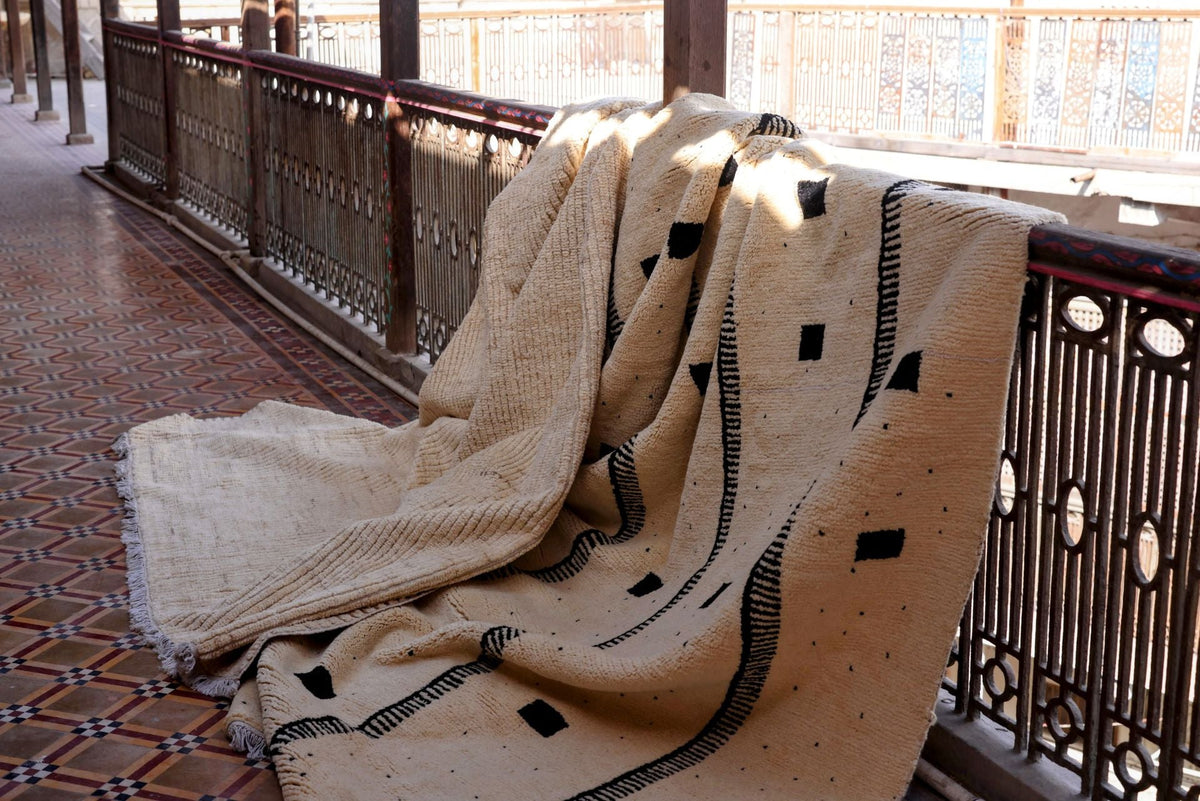
Vacuum weekly with the beater bar off, blot spills from the edge in with cold water, use a wool-safe cleaner sparingly, and have the rug professionally cleaned when it looks dull or after a big spill. That is the whole routine for a wool rug, and the sections below explain each step. If you are still choosing, browse wool rugs, each listed with its construction and size in cm.
The short routine
Vacuum once or twice a week, suction only on pile rugs. Blot spills at once and do not rub. Rotate the rug every six months, keep it out of long direct sun, and use a rug pad.
How often should you clean a wool rug?
Vacuum weekly, and more often in a busy room or a hall. Shake a small rug outside when you can. Beyond that, clean a wool rug when it needs it: a spill that does not lift, a dull look to the pile, or a smell that vacuuming does not clear.
Wool hides light soil well, so you will not see dirt as quickly as on a synthetic rug. That is a reason to vacuum on a schedule rather than waiting until it looks dirty.
How do you vacuum a wool rug?
On a pile rug, switch the beater bar off or use the suction-only setting. A spinning brush pulls at the pile and can loosen the knots. Go with the direction of the pile, slowly, and do not drag the vacuum over the fringe: lift it over, or brush the fringe gently with a soft brush.
On a flatweave such as a kilim, use low suction and vacuum both sides. A flatweave has no pile to hide dirt, so it benefits from both faces being cleaned. Our guide on how to clean a kilim rug goes into the detail.
How do you clean a spill on a wool rug?
Act quickly. Wool carries lanolin, a natural wax that slows a spill soaking in, so you have a few minutes, and it helps to use them. Follow the same steps for any spill:
- Lift off any solid with a spoon.
- Press a clean, dry cloth on the spill and lift, working from the edge in so it does not spread.
- Dab with a cloth dampened in cold water, then blot dry. Do not use hot water.
- Do not rub or scrub. Rubbing pushes the stain deeper and roughens the fibre.
- Dry the damp patch flat, with air moving around it.
Wine. Blot as much as you can, then dab with cold water until the cloth comes away clean. Coffee. The same, and act fast, as the tannin can mark pale wool. Mud. Let it dry, then vacuum off the dry soil before you dab at any mark.
Which cleaner is safe for wool rugs?
Use a wool-safe cleaner, which means a pH-neutral one made for wool, and use as little as you need. Test it on a hidden corner or the back of the rug first, wait for it to dry and check that the colour has not moved.
Avoid bleach, ammonia and biological detergents. They can strip dye and damage the fibre. Do not soak the rug, and rinse out any cleaner with a cloth dampened in cold water so that no residue is left to attract dirt.
How do you deep clean a wool rug at home?
For a hand-knotted pile rug, we do not recommend deep cleaning at home. A wet pile rug is heavy, slow to dry and can lose dye or shrink. For a small flatweave, a gentle clean with cold water and a wool-safe soap is possible, as long as you test for colour run first and dry it fully, flat, with air moving around it.
Whichever you have, never use a steam cleaner. Heat and soaking are the two things wool handles worst.
When should you call a professional rug cleaner?
Call a specialist for a large hand-knotted rug, a pet accident, a stain that has not lifted after blotting, any sign of colour run, or any sign of moths. Tell them the rug is wool and how it was made: hand-knotted, hand-tufted or flatweave. A specialist can wash a rug by full immersion, which is not something you can reproduce at home.
Everyday care
Rotate the rug
Turn the rug through 180 degrees every six months. That spreads footfall and sunlight across the whole surface, so one side does not wear or fade faster than the other.
Use a rug pad
A pad stops the rug slipping, protects the floor and cushions the rug, which reduces wear on the underside. It matters most under a flatweave, which has no pile to grip the floor. Choose a pad a little smaller than the rug, so it does not show at the edges.
Sun, heat and damp
Long direct sun fades dyes, so use curtains or move the rug if a patch sits in strong light every day. Keep a wool rug away from direct heat, and check the heating maker's advice before you lay one over underfloor heating. Keep it dry: a rug that stays damp can develop mildew and a musty smell.
Storing a wool rug
If you store a rug, clean it first, roll it with the pile inward rather than folding it, and wrap it in a breathable cover such as cotton or muslin. Do not seal it in plastic. Check it now and then, because wool is a fibre that moths can eat.
Why does my new wool rug shed?
A new pile rug sheds short loose fibres left from spinning and clipping. It is normal, it slows over the first weeks and vacuuming clears it. Do not pull a loose tuft: snip it level. Flatweaves shed far less. Read do wool rugs shed for how long it lasts.
Can you stop stains before they happen?
Place the rug away from the worst spill zones, blot at once and vacuum often so dirt does not grind in. Lanolin slows a spill but does not stop it, so speed matters most. A pad helps the rug stay in place. For placement and spray advice, see how to protect a wool rug from stains.
Can you put a wool rug in the washing machine?
Not if it is handmade. Agitation and heat can shrink wool, felt the pile and make dyes run, and a soaked rug is heavy and slow to dry. Rugs sold as washable are usually small and machine-made. Read can you wash a wool rug before you try.
Questions we get asked
Can I use a carpet cleaner on a wool rug?
Be careful. Many carpet cleaners use heat, soak the rug or leave residue, and some contain products wool dislikes. If you use one, choose a setting without heat, a cleaner made for wool, and test a hidden corner first. For a hand-knotted rug, ask a specialist.
How long does a wool rug take to dry?
It depends on how wet it got and how well air moves around it. A damp patch blotted well usually dries within a day. A soaked rug takes much longer, which risks mildew. Dry it flat, away from direct heat and sun, with air moving around and under it.
Is baking soda safe on wool?
We would not make it a first choice, because wool prefers pH-neutral products. If you try it, test a hidden corner, sprinkle lightly, leave it dry, then vacuum it all up with suction only. Never mix it into a paste or work it into the pile with water.
Before you buy a rug, read how to choose a wool rug. Browse wool rugs when you are ready.