Hand-knotted rugs are tied knot by knot on a loom. Hand-tufted rugs have yarn punched through a backing with a hand-held gun, then sealed. Hand-woven rugs are flat, with weft passed through warp. Knotted is the slowest to make and usually the longest-lasting, and tufted is the quickest and the cheapest. If you are still deciding whether wool is the right fibre, read are wool rugs good.
How is each rug made?
Hand-knotted rugs
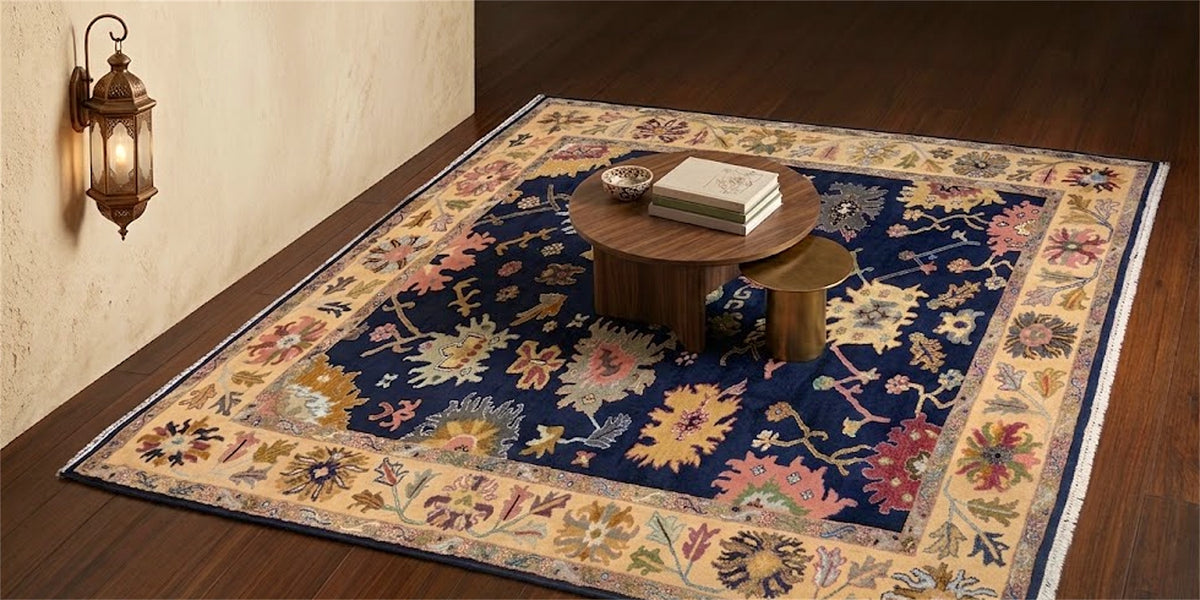
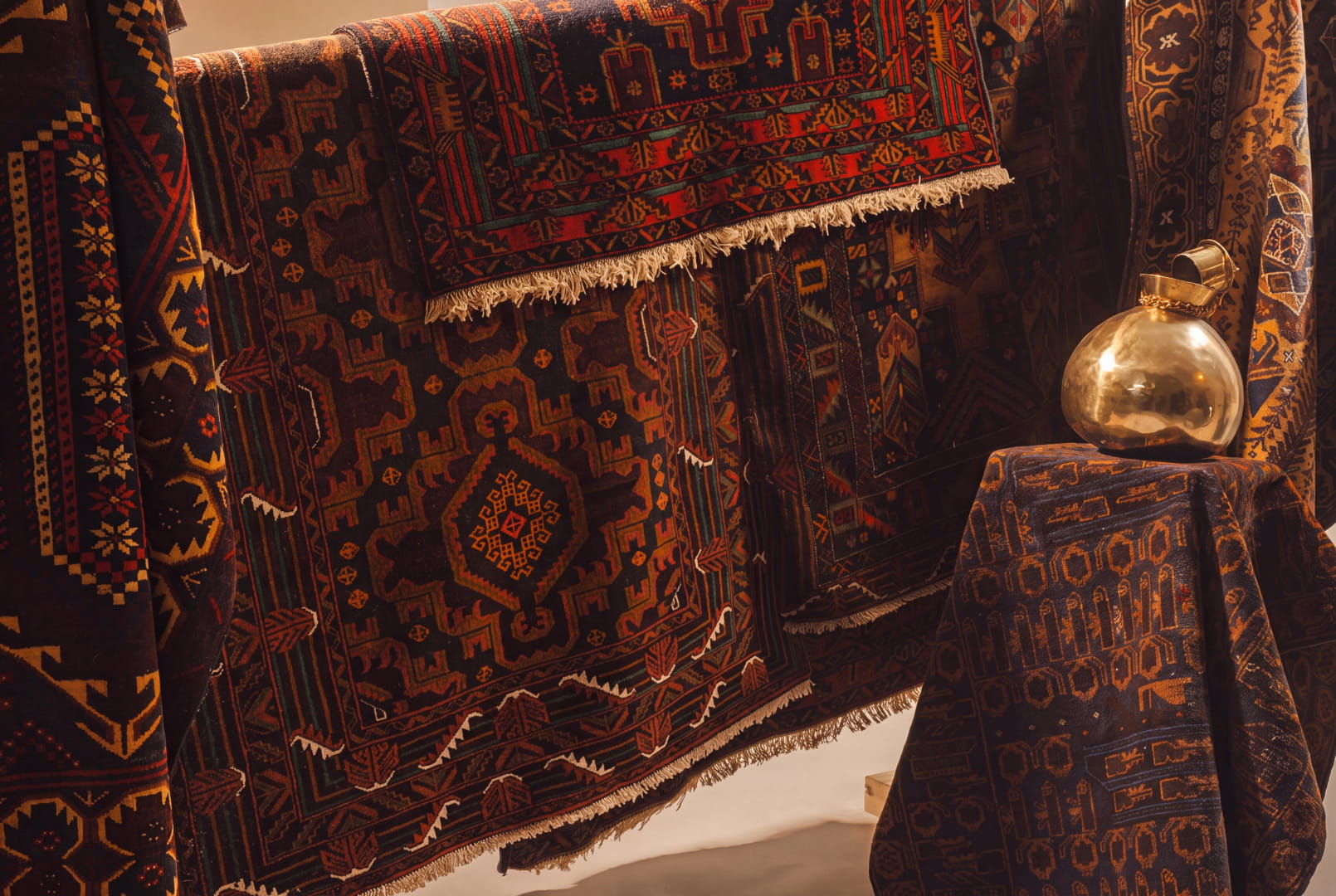
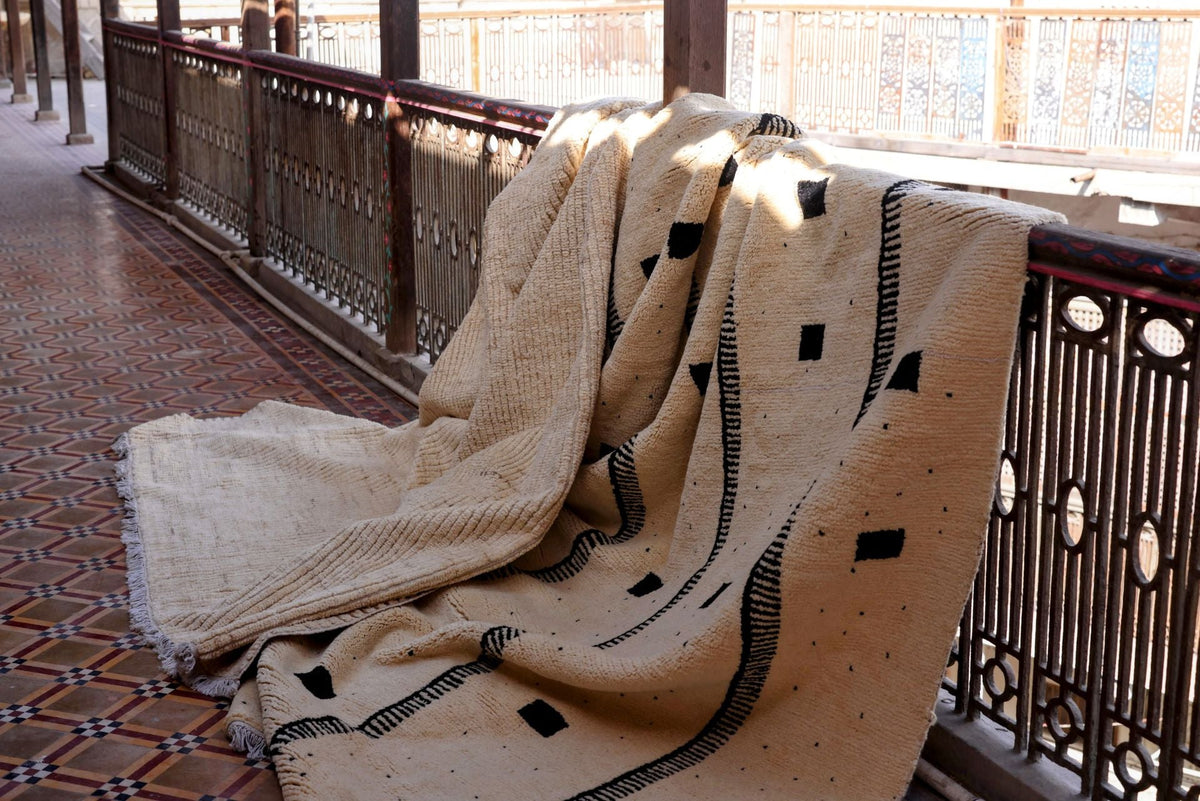
The weaver ties each knot by hand around the warp threads on a loom, and cuts the yarn to leave a tuft. Row by row, the knots build the pattern. Because the knots run through the rug, the design shows on the back as clearly as on the front. Knot count varies with the fineness of the weave. Browse hand-knotted rugs.
Hand-tufted rugs
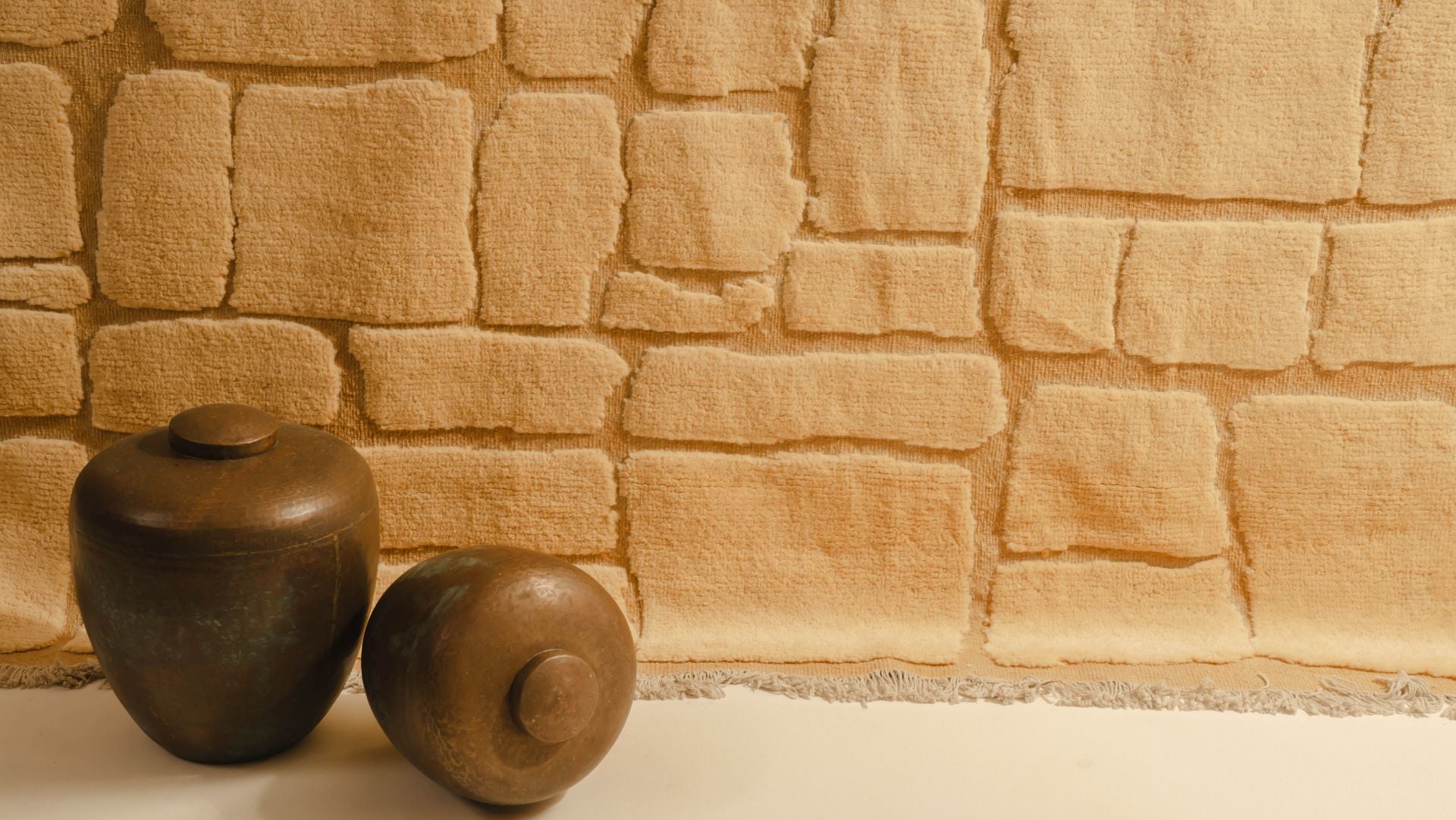
The design is drawn onto a stretched backing. The maker punches wool yarn through it with a hand-held tufting gun, then seals the back with a coating to hold the yarn in place. There are no knots. It is quicker to make than knotting, and several rugs of one design and size can exist at once. It is still made by hand.
Hand-woven rugs (flatweave and kilim)
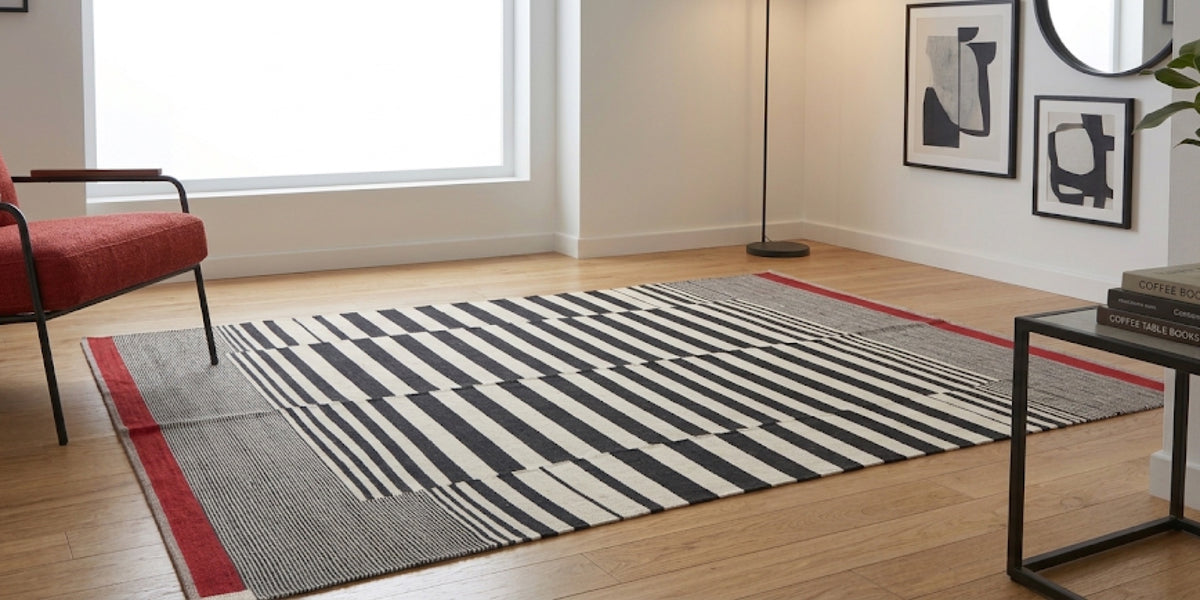
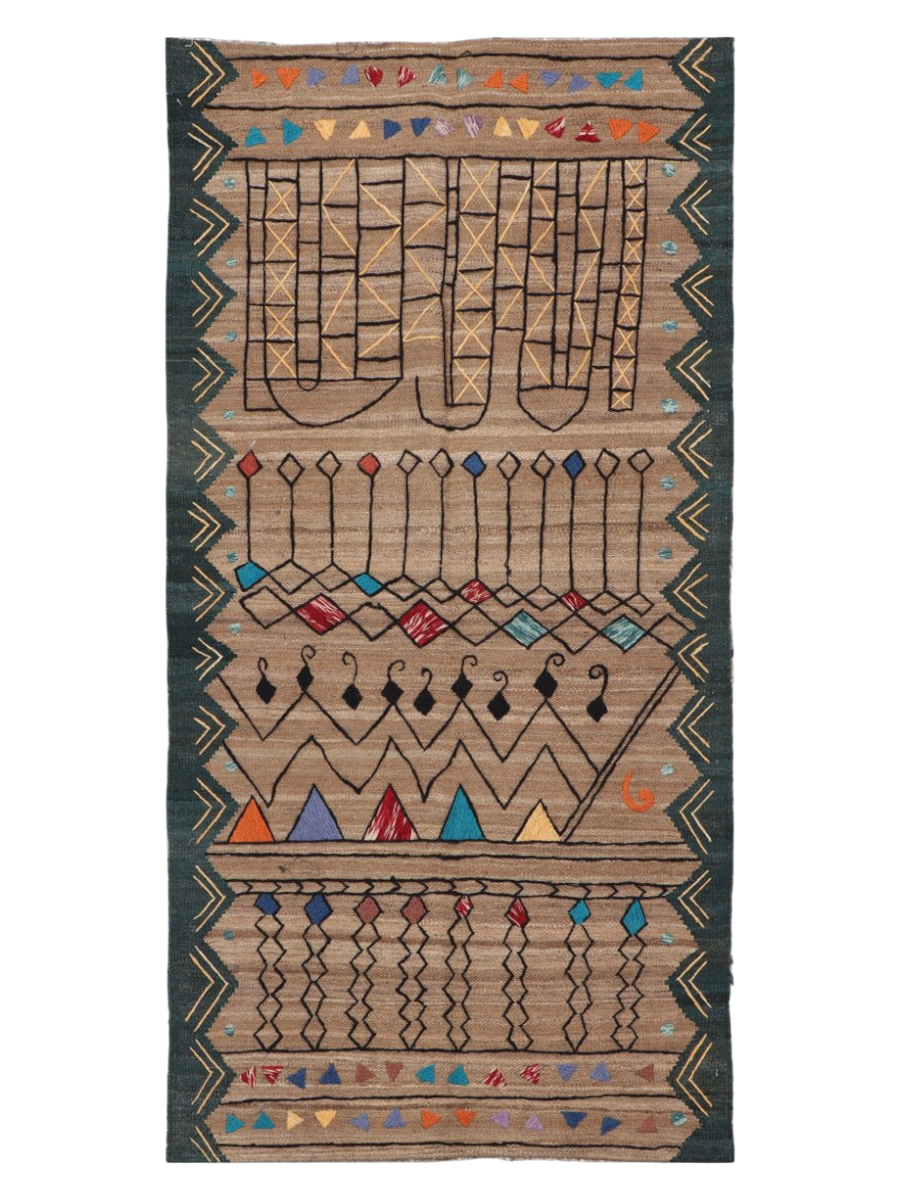
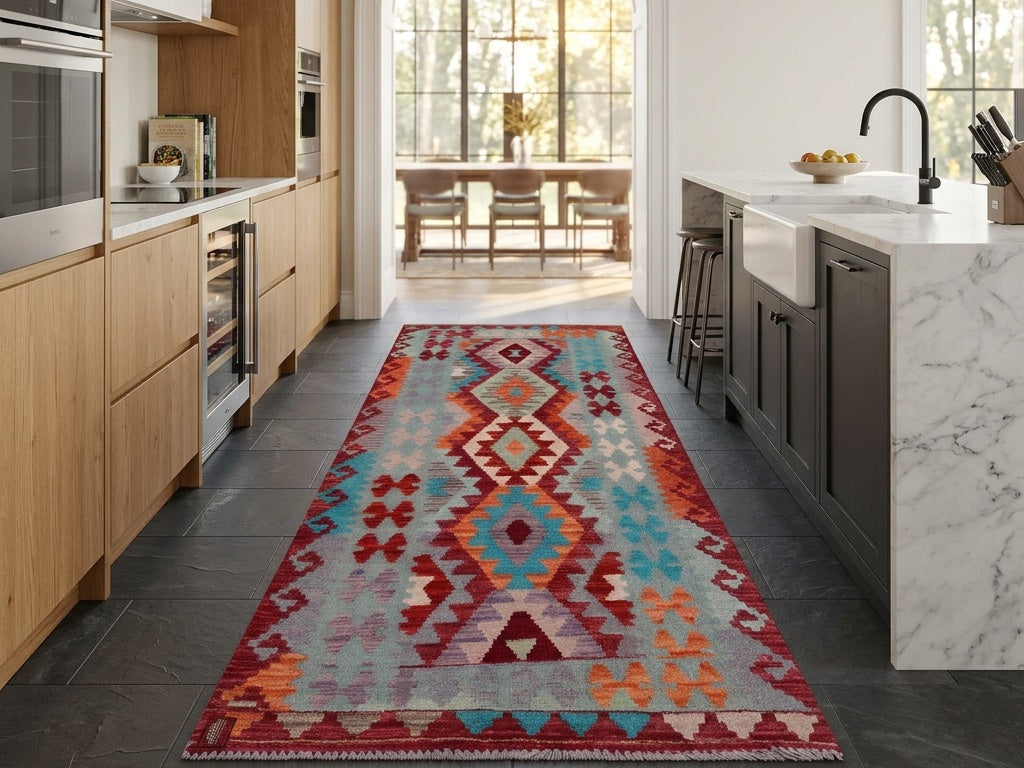
There are no knots and no pile. Weft threads pass over and under the warp, and pack down until they cover it, so the pattern shows on both faces. A kilim is made this way. Browse flatweave rugs and kilim rugs.
A note on hand-loomed. A hand-loomed rug is woven on a loom without tied knots. The weaver interlaces weft with warp in repeated sequences, and pile height and pattern are set by tension and by the weaving method. A loomed rug can have a short pile or a flat face. Most listings that say hand-loomed sit between a flatweave and a tufted rug in how they feel.
Side by side
| Hand-knotted | Hand-tufted | Hand-woven (flatweave) | |
|---|---|---|---|
| How it is made | Knots tied on a loom | Yarn punched through a backing | Weft woven across warp |
| Pile | Yes, upright | Yes | None |
| Back of the rug | Shows the pattern clearly | Sealed backing | Same pattern on both faces |
| Time to make | Longest | Shortest | In between |
| How long it lasts | Many years with care | Shorter, if the backing wears | Many years with care |
| Reversible | No | No | Yes |
| Price | Highest of the three | Lowest of the three | In between |
| Suits | Living rooms, bedrooms, dining rooms | Living rooms and bedrooms | Halls, dining rooms, kitchens |
How can you tell which one you are looking at?
Start with the title, because ours name the construction: Hand Knotted, Hand Tufted or Kilim. Then turn the rug over. A clear, matching pattern on the back points to knotting, and a sealed backing of fabric or latex points to tufting. A rug that looks the same on both faces is a flatweave.
Run your hand across the front. No pile at all means a flatweave. Finally, look at the fringe. On a knotted or woven rug it is the loose end of the warp, part of the rug itself. On a tufted rug it is usually added afterwards. If you want to compare how each is made against how it is described, read handmade or machine-made.
Are hand-tufted wool rugs good?
They can be good value. A tufted wool rug is soft, quicker to make and usually costs less than a knotted one, and it suits a living room or bedroom that does not see heavy daily use.
The trade-off is the backing. The glue or latex that holds the yarn can wear, and it can smell and soften if the rug gets wet, so a tufted rug has a shorter life than a knotted one. The Wool Rugs collection holds hand-knotted and hand-woven rugs, not tufted rugs.
What is a hand-tied rug?
It is another name for a hand-knotted rug. Each knot is tied by hand. The term varies from seller to seller, so check the listing for the word knotted and look at the back of the rug.
Which one suits your room?
Living room. Choose a hand-knotted pile rug, which is soft underfoot and keeps its shape under furniture and footfall.
Hall, dining room and kitchen. Choose a flatweave. Chairs slide on it, doors clear it, and you add a non-slip pad underneath.
Budget, or a room you will change soon. A tufted rug is the cheapest way into a pile rug, as long as you accept the shorter life.
Questions we get asked
What is the difference between a hand-knotted and a hand-tufted rug?
A hand-knotted rug has knots tied around the warp threads on a loom. A hand-tufted rug has yarn punched through a stretched backing with a hand-held gun, and the back is sealed. Tufting is quicker and usually costs less.
Is a hand-tufted rug handmade?
Yes. It is made by hand with a hand-held tool. It is a different method from knotting, and several rugs of one design and size can be made. The difference is in how it is made and how long it lasts.
Is a flatweave the same as a kilim?
A kilim is a type of flatweave. Both have no pile. "Flatweave" is the wider term for any rug woven flat, and a kilim is the best-known kind.
Which is best for a hall?
A flatweave runner has no pile to flatten and clears the door. A dense low-pile runner also works. Add a non-slip pad either way, as a flatweave has no pile to grip the floor.
Is a hand-knotted rug worth the extra cost?
For a room with daily use, usually. A hand-knotted rug takes the longest to make and keeps its shape for many years with care. If the room will change or sees little use, a tufted rug costs less and does the job for a shorter time.
For the wider picture, read the handmade rugs guide. When you are ready to choose, browse hand-knotted rugs, handmade rugs or wool rugs.