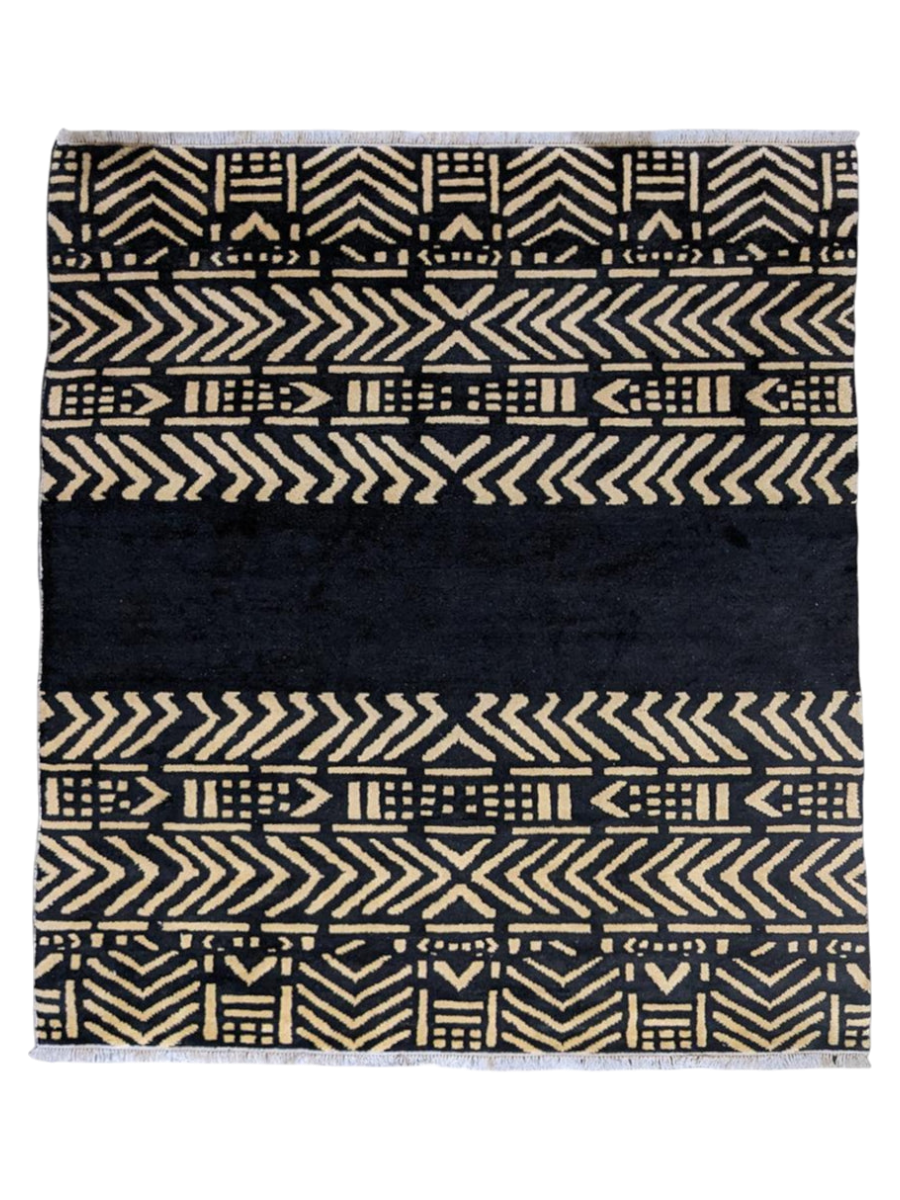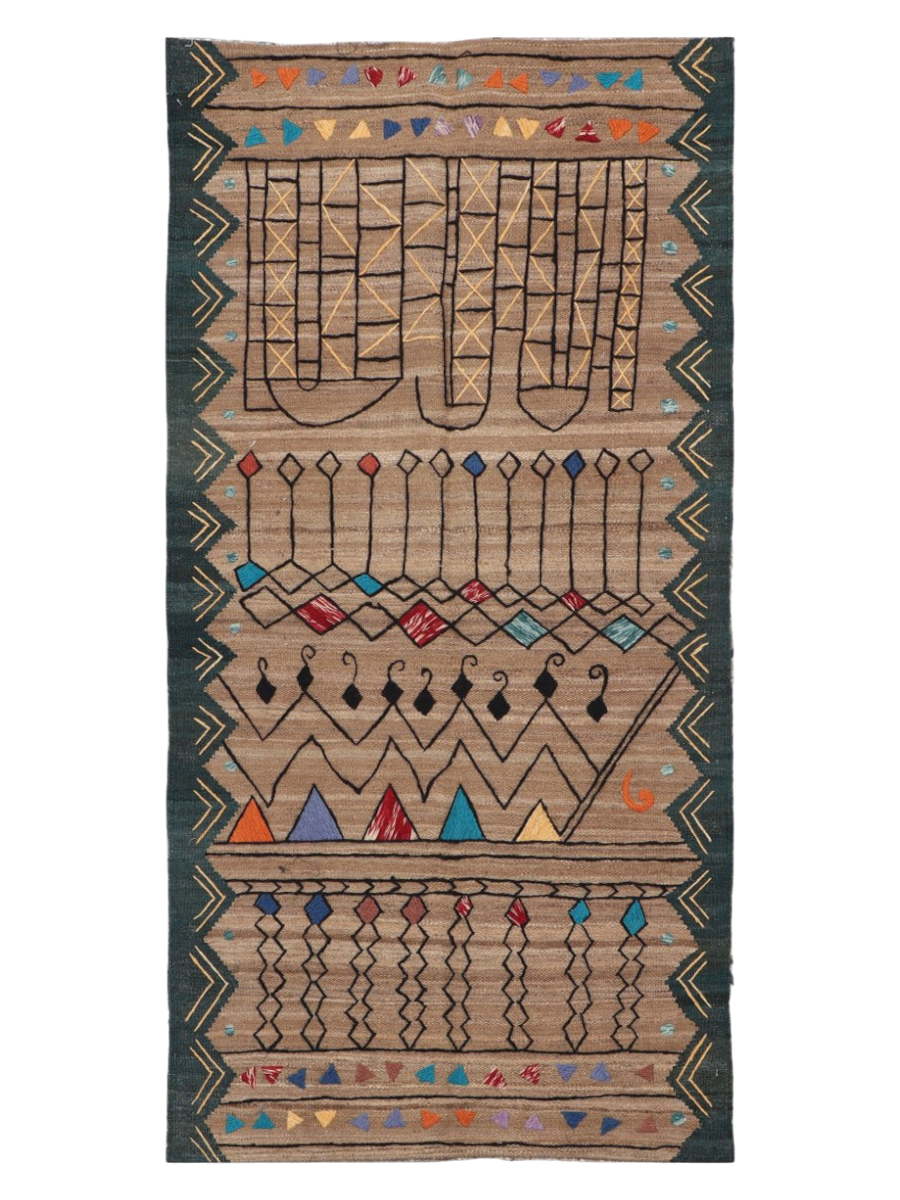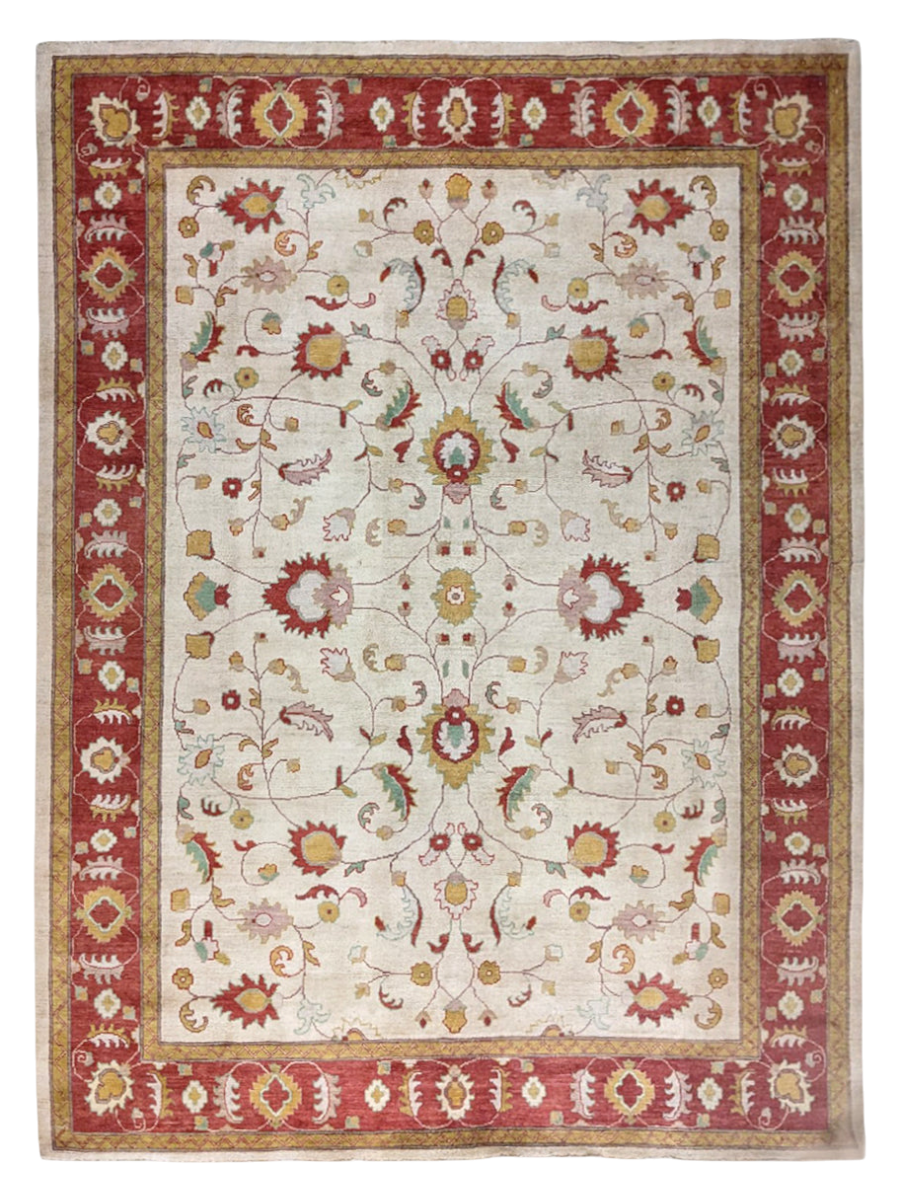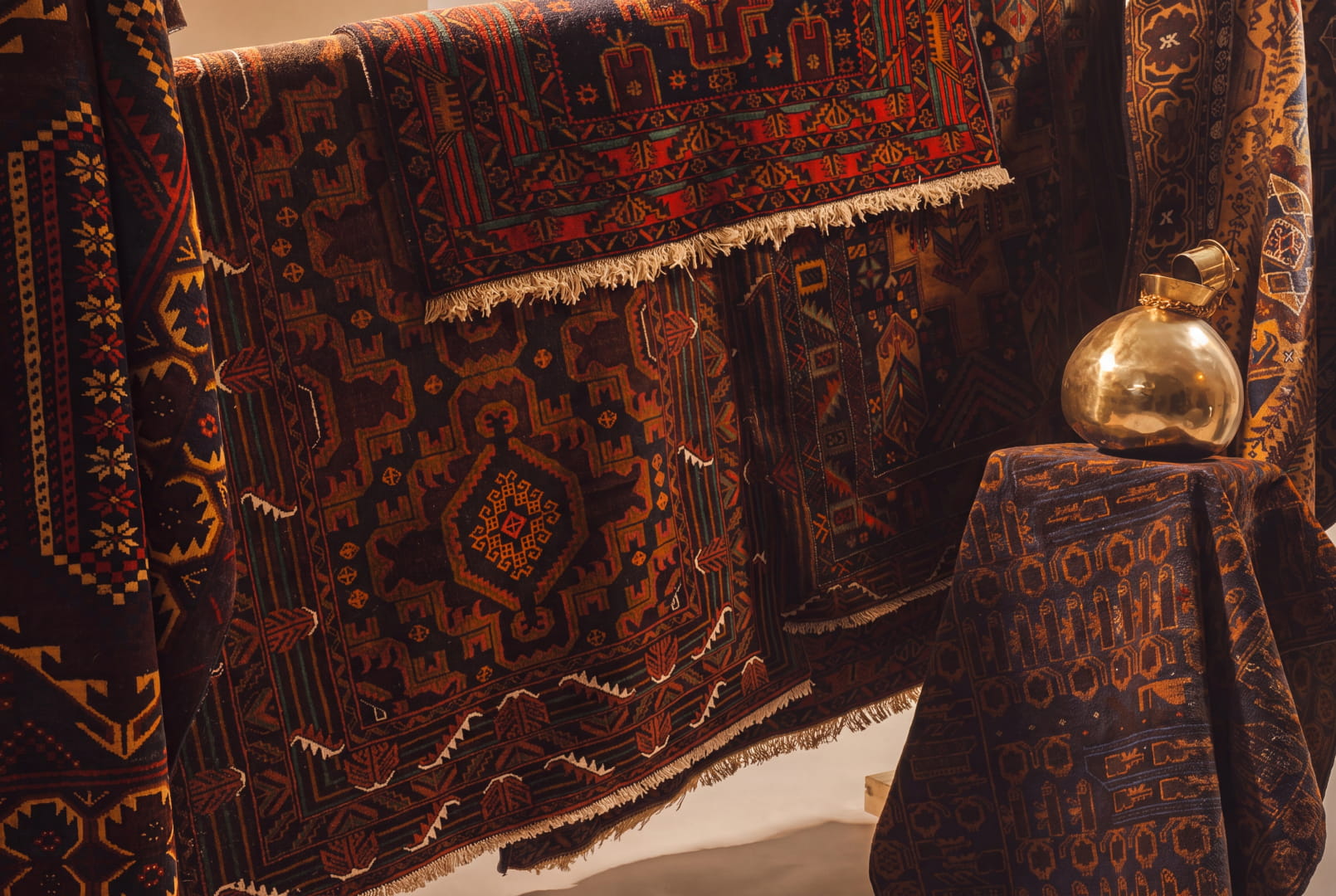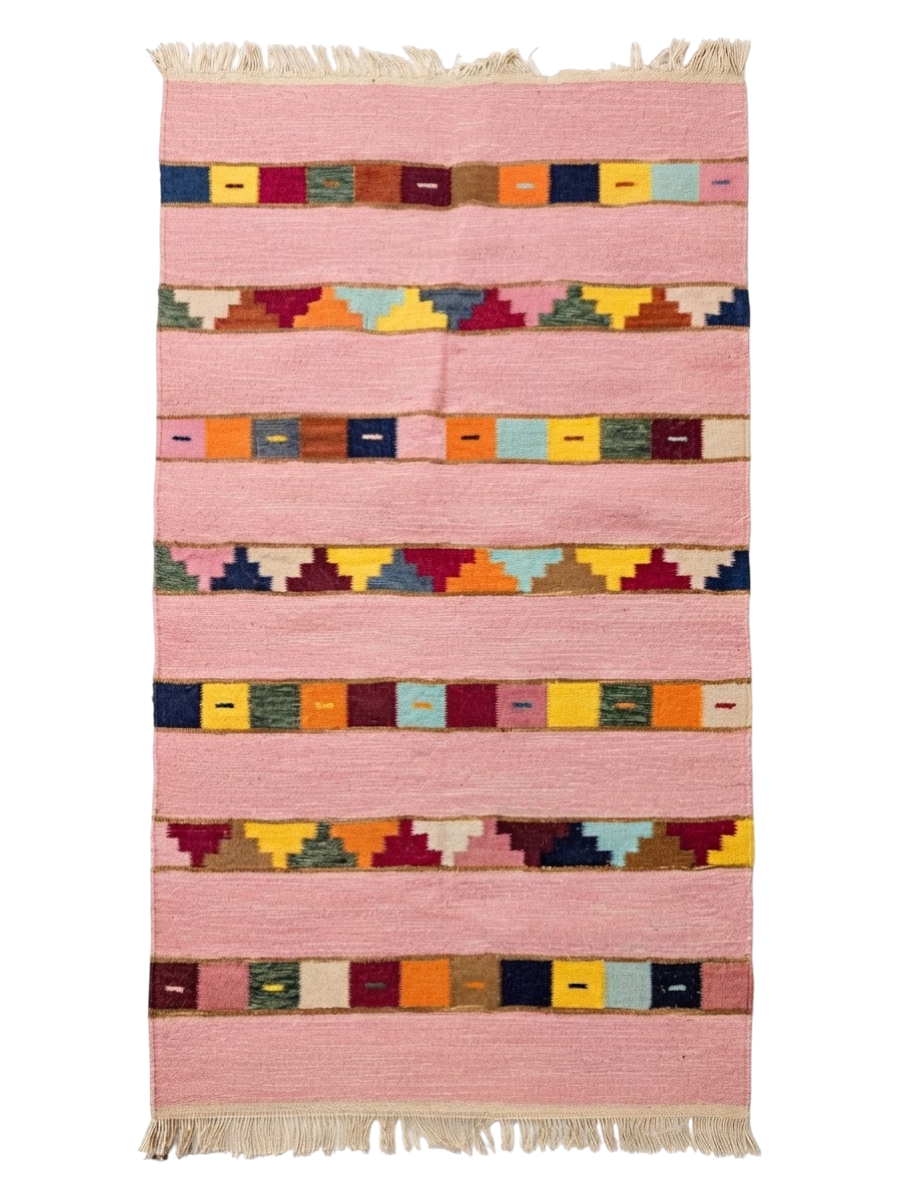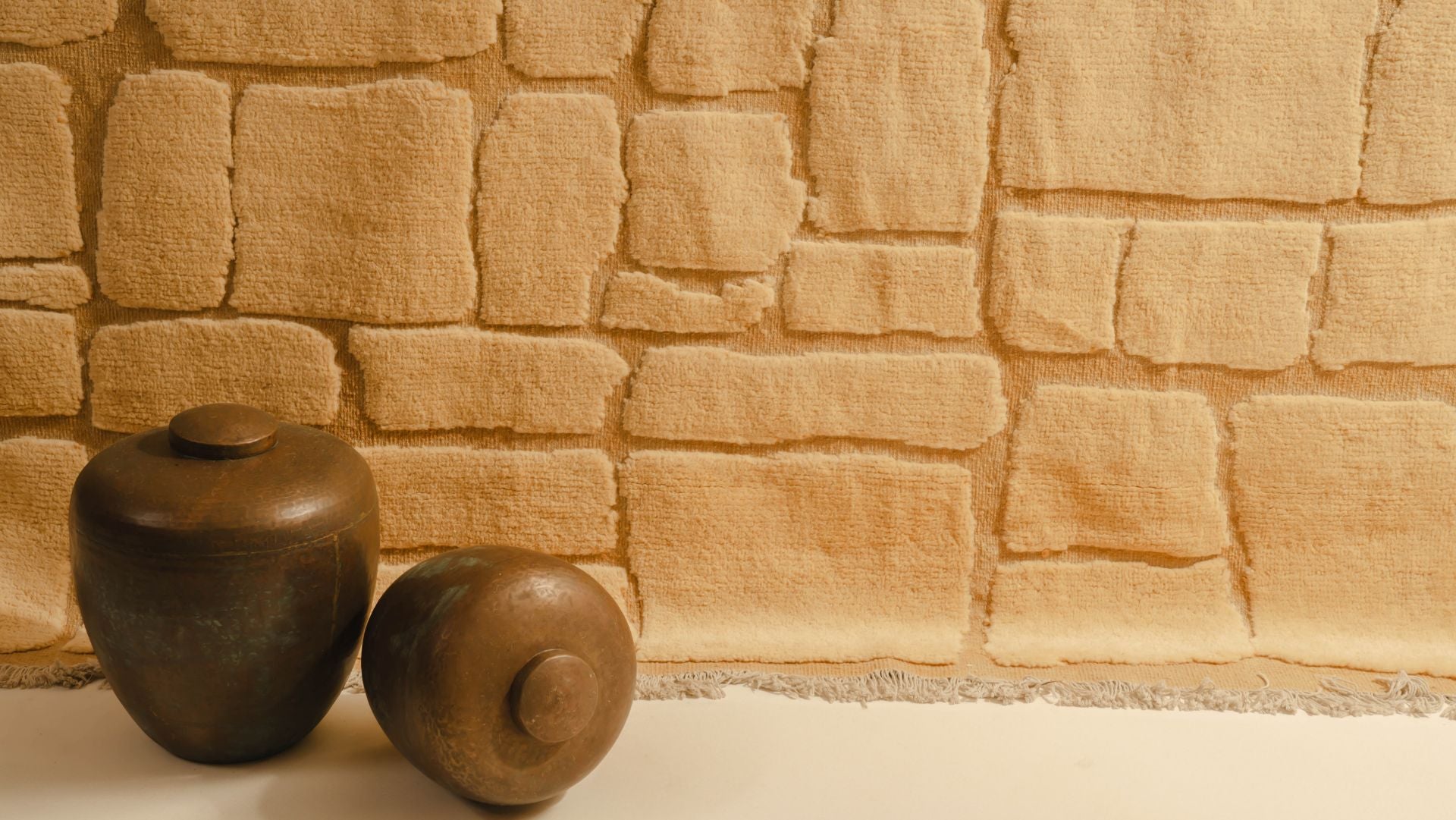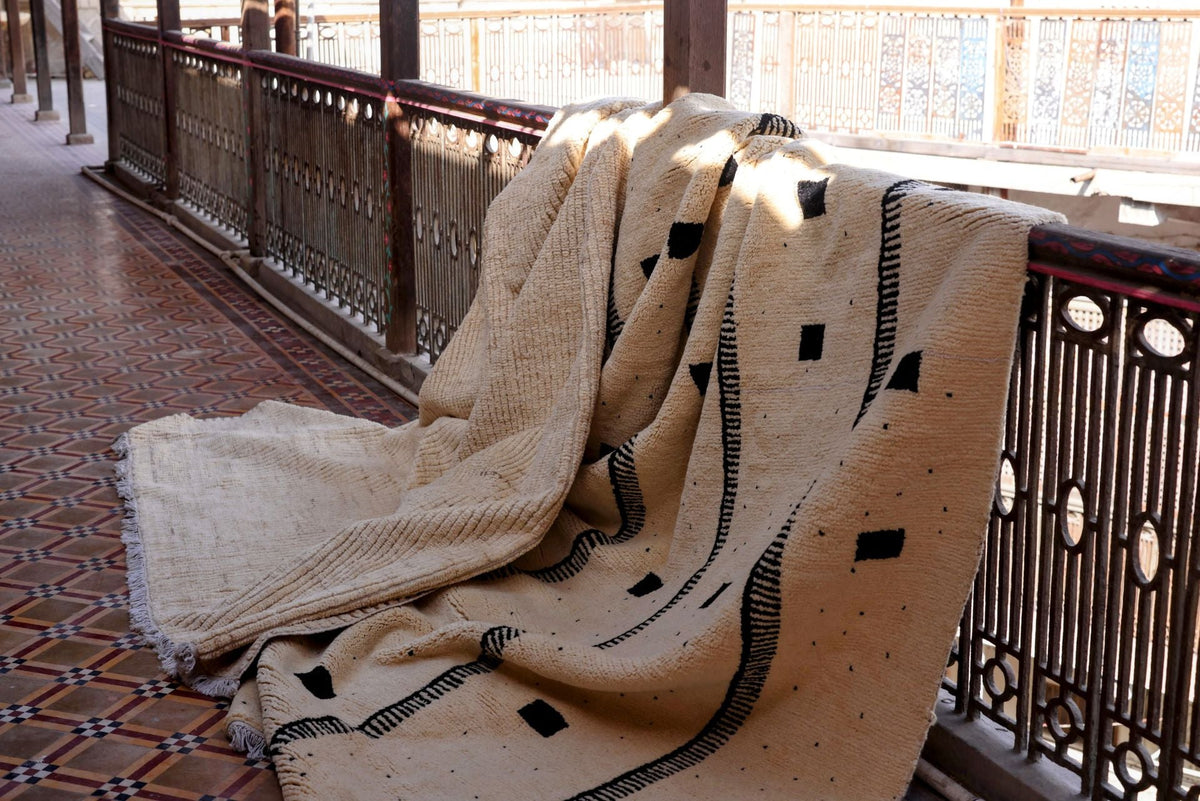
Hand-knotted, hand-tufted and hand-woven rugs are all made by hand, but in three different ways. The method changes how the rug looks, feels and behaves at home. Here are the three side by side, so you can tell which one a listing describes and which suits your room.
The short answer
Hand-knotted rugs are tied knot by knot on a loom, with an upright pile and the pattern visible on the back. Hand-tufted rugs have yarn punched through a backing with a hand-held gun, then sealed, which is quicker. Hand-woven rugs, or flatweaves, have weft woven across warp: no pile, no knots, flat on both faces.
How each rug is made
Hand-knotted rugs
The weaver ties each knot by hand around the warp threads on a loom, and cuts the yarn to leave a tuft. Row by row, the knots build the pattern. Because the knots run through the rug, the design shows on the back as clearly as on the front. Knot count varies with the fineness of the weave. Browse hand-knotted rugs.
Hand-tufted rugs
The design is drawn onto a stretched backing. The maker punches wool yarn through it with a hand-held tufting gun, then seals the back to hold the yarn in place. There are no knots. It is quicker to make than knotting, and several rugs of one design and size can exist at once. It is still made by hand.
Hand-woven rugs (flatweave and kilim)
There are no knots and no pile. Weft threads pass over and under the warp, and pack down until they cover it, so the pattern shows on both faces. A kilim is made this way. Browse flatweave rugs and kilim rugs.
Side by side
| Hand-knotted | Hand-tufted | Hand-woven (flatweave) | |
|---|---|---|---|
| Made with | Knots tied on a loom | Yarn punched through a backing | Weft woven across warp |
| Pile | Yes, upright | Yes | None |
| Back of the rug | Shows the pattern clearly | Sealed backing | Pattern shows on both faces |
| Reversible | No | No | Yes |
| Time to make | Longest | Shortest | Weeks to months |
| Feel underfoot | Soft to firm, depending on the weave | Soft | Firm, low profile |
| Suits | Living rooms, bedrooms, dining rooms | Living rooms and bedrooms | Halls, dining rooms, kitchens |
How to tell which one you are looking at
Start with the title, because ours name the construction: Hand Knotted, Hand Tufted or Kilim. Then turn the rug over. A clear, matching pattern on the back points to knotting, and a sealed backing points to tufting. Run your hand across the front: no pile at all means a flatweave. Finally, look at the fringe. On a hand-knotted rug it is the loose end of the warp, while on a tufted rug it is usually added.
Which suits your home
For a soft rug in a living room or bedroom, choose a pile rug, knotted or tufted. For a hall, kitchen or dining room, choose a flatweave: chairs slide on it, doors clear it, and you add a non-slip pad. If you are not sure what you are looking at, ask about the construction and the fibre, and turn the rug over.
The same choice applies to wool. Our guide to choosing a wool rug shows how each construction behaves in wool. For the wider question, read our handmade rugs guide. An earlier post, Hand-Tufted vs Hand-Knotted, Hand-Loomed vs Handwoven Rugs, also covers hand-loomed rugs.
Questions we get asked
What is the difference between a hand-knotted and a hand-tufted rug?
A hand-knotted rug has knots tied around the warp threads on a loom. A hand-tufted rug has yarn punched through a stretched backing with a hand-held gun, and the back is sealed. Tufting is quicker.
Is a hand-tufted rug handmade?
Yes. It is made by hand with a hand-held tool. It is a different method from knotting, and several rugs of one design and size can be made.
Is a flatweave the same as a kilim?
A kilim is a type of flatweave. Both have no pile. "Flatweave" is the wider term for any rug woven flat.
Which is best for a hall?
A flatweave runner has no pile to flatten and clears the door. A dense low-pile runner also works. Add a non-slip pad either way.
How can I tell if a rug is hand-knotted?
Turn it over. The pattern shows as clearly on the back as on the front, and the fringe is the loose end of the warp threads.