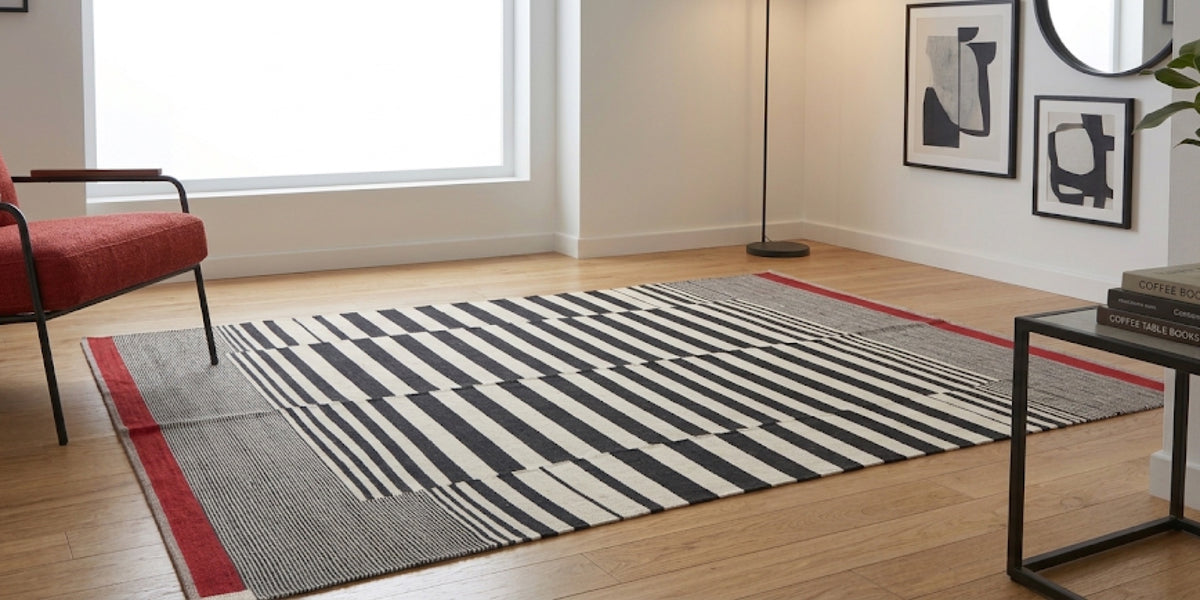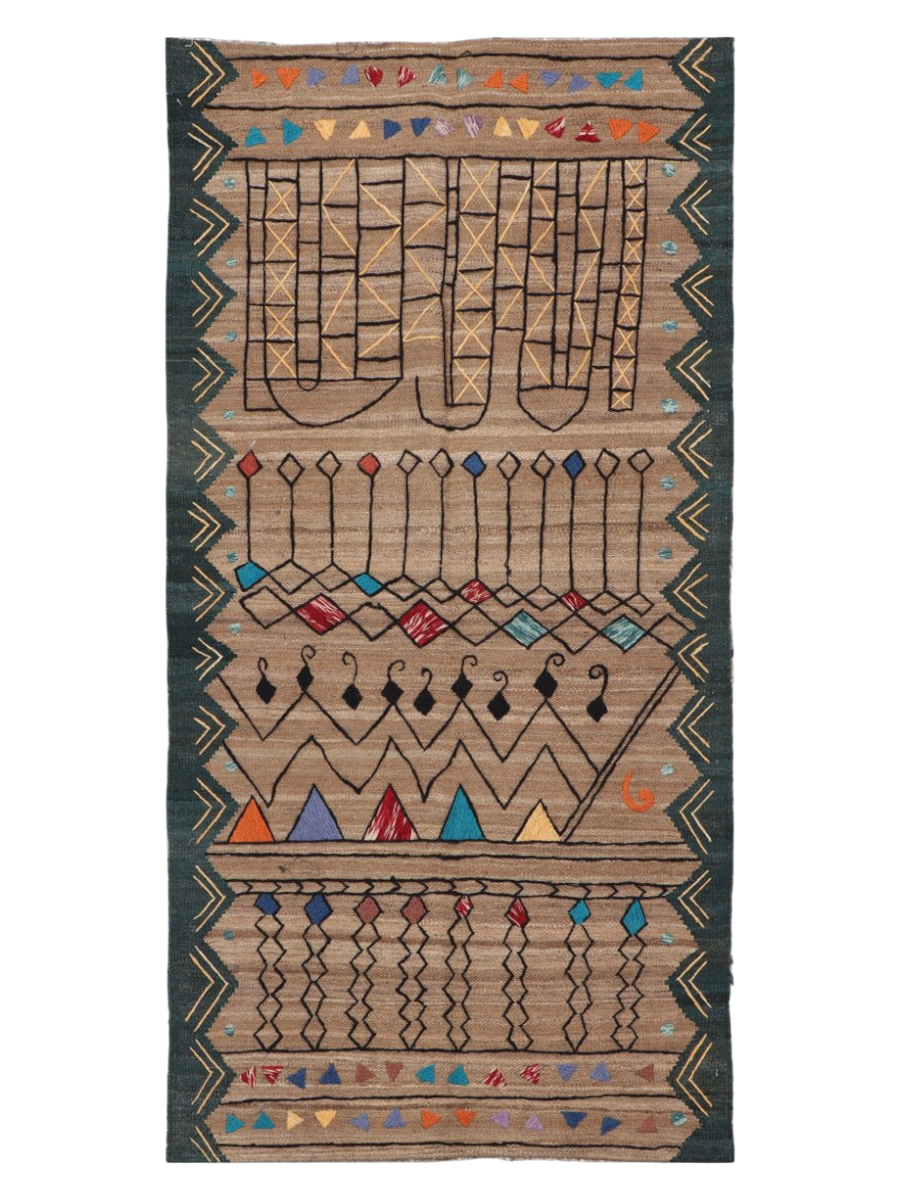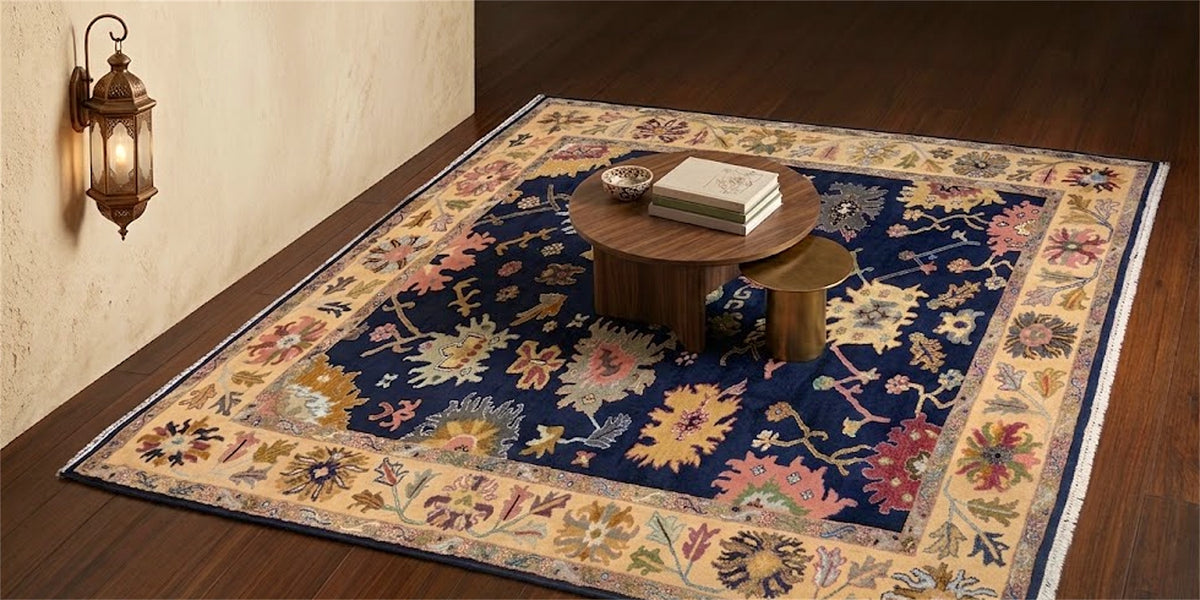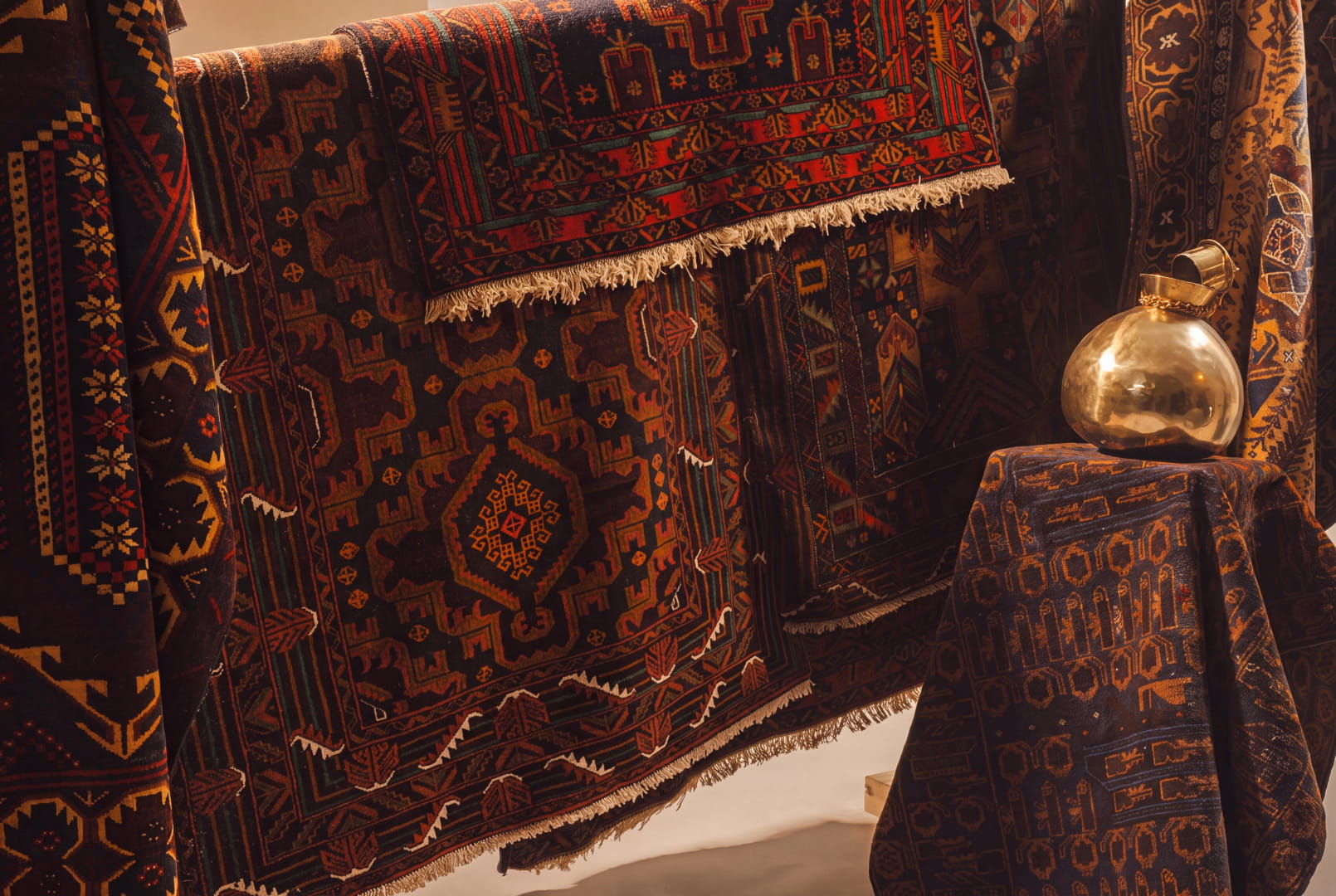
The choice between a flatweave and a pile rug is really a choice between two surfaces. One is thin, flat and reversible. The other has a layer of yarn standing up from a backing. Neither is better in every room. This guide sets out how they differ in feel, wear, cleaning and use, so you can match each to the room it suits.
The short answer
Choose a flatweave for halls, kitchens, dining rooms and anywhere you want a thin, light rug that you can turn over. Choose a pile rug where you want softness underfoot, such as a bedroom or a sitting room. See our flatweave rugs and our hand-knotted rugs.
What is the difference in construction?
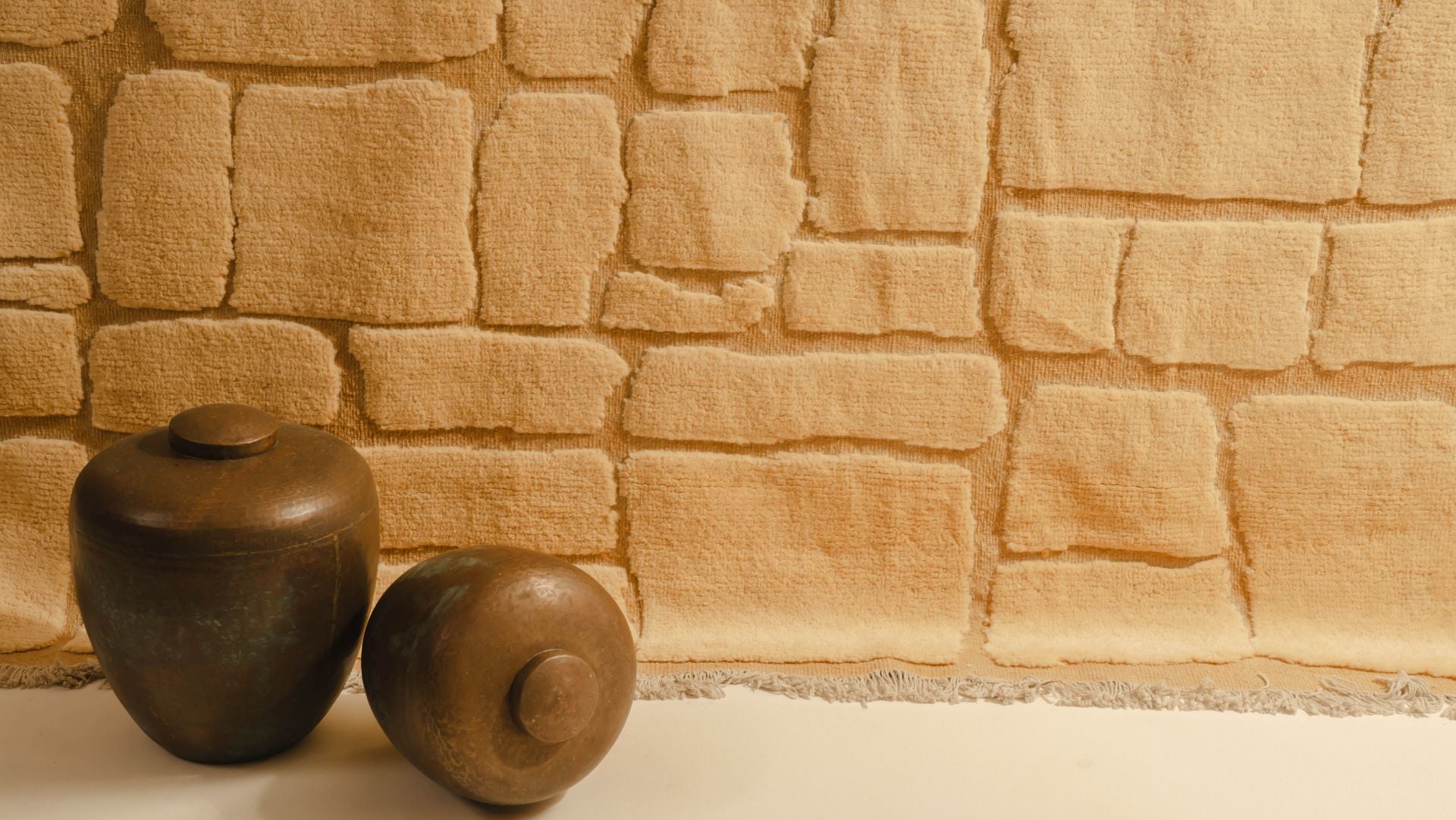
A flatweave is woven on a loom with the weft passing over and under the warp, and nothing is added to the surface. The pattern is the weave, so it shows on both faces. A pile rug has a foundation of warp and weft too, but short lengths of yarn are knotted or tufted into it, and the cut ends stand up to make the pile. Hand-knotted rugs tie each knot by hand. Tufted rugs punch yarn through a backing. For a fuller account of how flatweaves are made, read what a flatweave rug is.
How do they compare?
| Flatweave | Pile rug | |
|---|---|---|
| Surface | Flat, no pile | Raised pile of knotted or tufted yarn |
| Thickness | Thin and light, most of ours about 3 to 5 mm | Thicker and heavier for the same size |
| Underfoot | Firm, low-profile | Softer and cushioned |
| Reversible | Yes, both faces show the pattern | No, one face only |
| Wear | No pile to crush or mat down | Pile can flatten in the lines people walk |
| Vacuuming | Both faces, beater bar off | Follow the pile, beater bar off for hand-knotted |
| On a hard floor | Slides unless it has a pad | Heavier, but a pad still helps |
| Shedding | Very little | New wool pile rugs shed for the first weeks |
Which wears better in a busy home?
A pile rug wears by its pile flattening and matting down along the lines people walk. A flatweave has no pile, so there is nothing to crush, and the weft is packed tightly over the warp. That is why a flat-woven wool kilim is a common choice for halls and stairs. Wear on a flatweave comes from sliding, grit in the weave, long direct sun and moisture, not from matting. Are kilim rugs durable goes through each of these.
Which is easier to clean?
A flatweave is thin and light, so it is easy to lift, and you can vacuum both faces, which lifts the grit that has worked through the weave. There is no pile for dust to sit in. A pile rug holds dust and grit deeper in the pile, so it needs regular vacuuming along the direction of the pile. Either kind should have its spills blotted, not rubbed, and a professional clean now and then. The routine for a flatweave is in how to clean a kilim rug.
New wool pile rugs shed loose fibres in the first weeks of use. Flatweaves shed far less. Read do wool rugs shed for what to expect.
Which suits which room?
| Room | Flatweave | Pile rug |
|---|---|---|
| Hall or stairs | Suits: no pile to flatten, clears doors | Works, but low piles suit a hall best |
| Kitchen | Suits: light, easy to shake out | Less practical where spills are likely |
| Dining room | Suits: chairs slide on a flat surface | Chairs can catch on a deeper pile |
| Bedroom | Works under or beside the bed | Suits where you want softness underfoot |
| Sitting room | Works, with a pad for grip | Suits where you sit and relax on the floor |
For the size, measure the room first and work in cm. Rug sizes in cm converts feet to cm for each common size, and how to measure a kilim runner covers halls and stairs.
Is one cheaper than the other?
Not by construction alone. Price follows the size of the rug and the hours it takes to weave or knot. A hand-knotted rug usually takes longer per square metre than a flatweave of the same size, which tends to show in the price, but a large flatweave can still cost more than a small knotted rug. Compare on size in cm and what each listing says about how it was made.
Questions we get asked
Is a flatweave better than a pile rug?
Neither is better in every room. A flatweave is thin, light and reversible, and it suits halls, kitchens and dining rooms. A pile rug is softer underfoot, so it suits bedrooms and sitting rooms. Choose by the room and how you use it.
Are flatweave rugs comfortable?
They are firm underfoot rather than soft, because there is no pile to cushion. A non-slip pad adds some give and stops the rug sliding. If you want a rug to sit or lie on, a pile rug is usually more comfortable.
Do flatweave rugs wear out faster?
Not in the way a pile does. A tightly woven wool flatweave has no pile to mat down. A very thin or loosely woven one will wear faster than a tight one. Sliding, grit and long direct sun are what shorten a flatweave's life.
Can you use a flatweave on stairs?
Yes. A flatweave runner has no pile to crush, so it takes daily use on stairs. Measure each step as tread plus riser, and fix the runner in place with carpet grippers or stair rods so it does not slide.
Do I need a rug pad under either kind?
We recommend one under a flatweave, because it is thin and can slide and ruck up on a hard floor. A pad also helps under a pile rug, where it protects the floor and reduces wear on the underside of the rug.