People often ask whether a kilim is Afghan, Turkish or Moroccan, and what that changes. Each tradition makes flatweaves, but they differ in patterns, colour and how they are used. This guide sets out the differences in plain terms, so you can choose with your eyes open.
The short answer
Turkish kilims are Anatolian flatweaves with bold geometric motifs. Moroccan flatweaves are often banded or striped and sit alongside the better-known Moroccan pile rugs. Afghan kilims, including those woven in Maimana, are flat-woven in wool in geometric and tribal patterns. Our current range is woven in Afghanistan and Pakistan. See our kilim rugs.
Afghan kilims
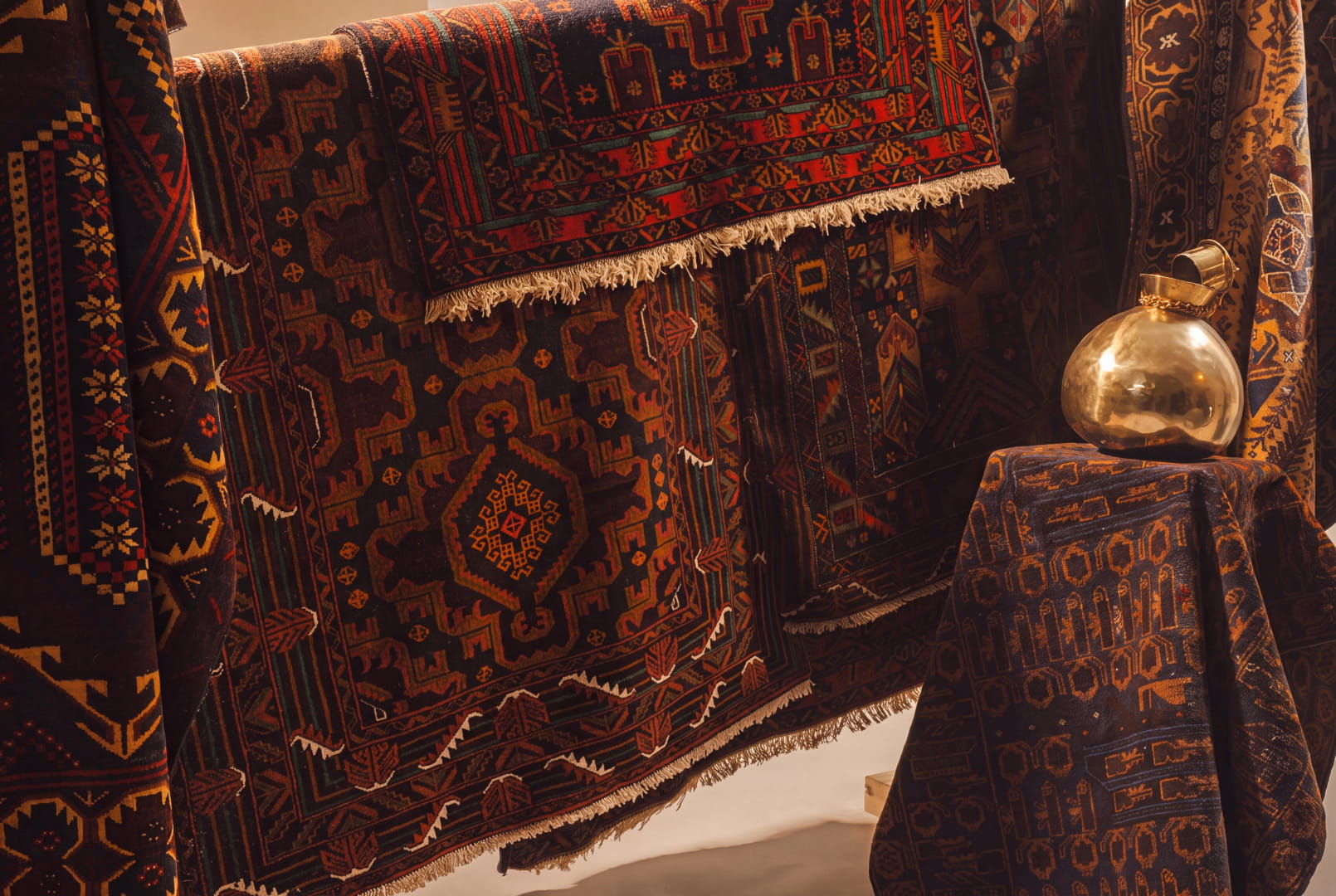
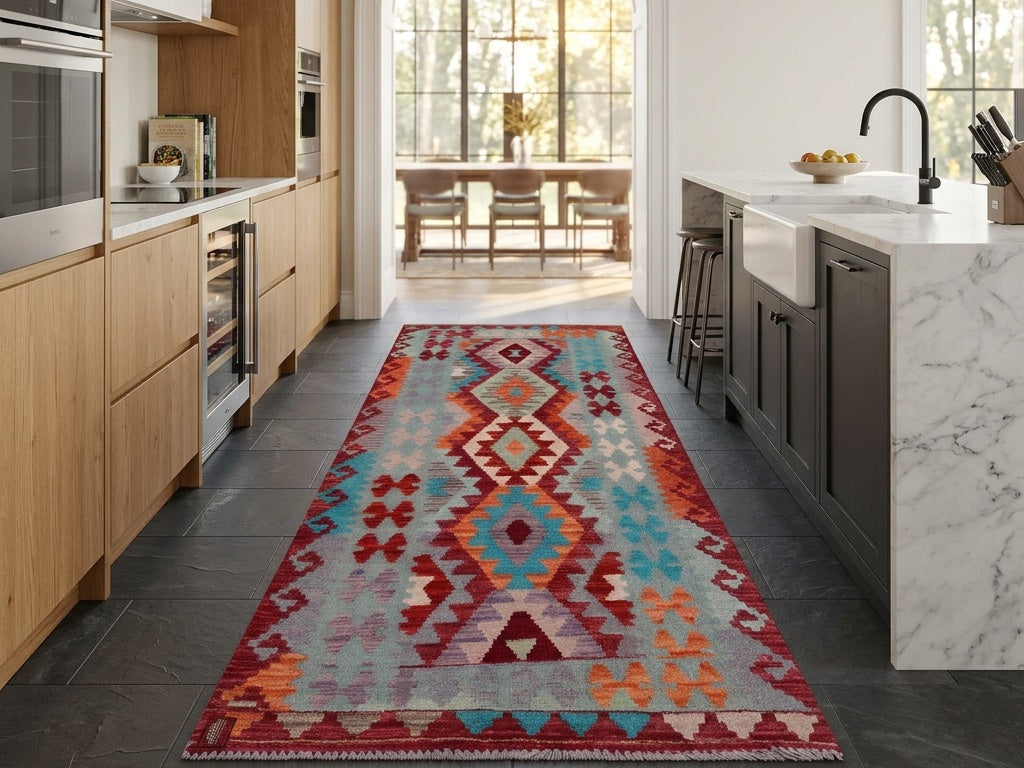
Afghan kilims are woven in several regions. Ours come mostly from Maimana, in Faryab province, where the weavers work in wool on hand looms. The patterns are geometric: repeated diamonds, stepped shapes and borders. Each listing names where the rug was woven. For the full picture, read what a Maimana kilim is, or browse Afghanistan kilim rugs.
Turkish kilims
Turkish kilims come from Anatolia and are among the best known flatweaves. They are typically woven with bold geometric motifs and clear colour blocks, in slit-tapestry technique. The word kilim itself comes through Turkish. Turkish kilims are often described by town or region, and older pieces are collected. We do not currently list Turkish kilims for sale.
Moroccan flatweaves
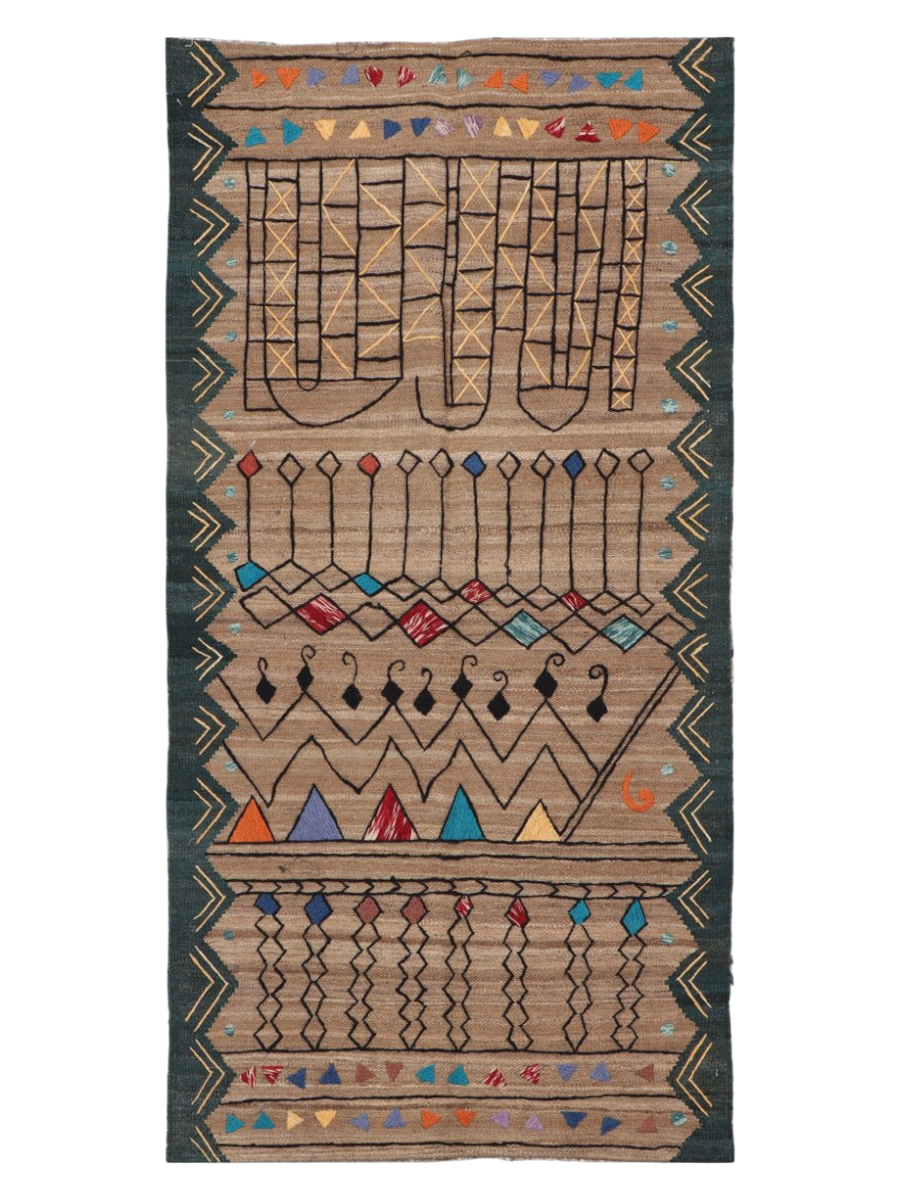
The Moroccan rugs most people know, such as Beni Ourain, are pile rugs. Moroccan flatweaves exist too, among them the hanbel, a striped or banded woven cloth often used as a blanket or rug. They are generally lighter in pattern than Afghan or Turkish kilims. We do not list Moroccan kilims either.
How they compare
| Tradition | Where from | Typical look |
|---|---|---|
| Afghan (Maimana) | Faryab province, Afghanistan | Geometric diamonds, stepped shapes and borders, in wool |
| Turkish | Anatolia | Bold geometric motifs and colour blocks, slit-tapestry weave |
| Moroccan | Morocco | Stripes and bands, often a lighter pattern |
What matters more than the label
Origin is one question. How the rug was made matters just as much: is it handwoven, is it wool, does the listing say where it was made and in what size in cm? Turn the rug over: a real kilim looks the same on the back. Kilims sit within the wider group of flatweave rugs. Our guide on what a kilim rug is shows how to tell one from a pile rug, and how to choose a kilim rug covers size, room and colour.
Questions we get asked
What is the difference between a Turkish and an Afghan kilim?
Both are flatweaves. Turkish kilims come from Anatolia and use bold motifs and colour blocks. Afghan kilims are woven in regions such as Maimana, mostly in wool, in geometric and tribal patterns.
Is a Moroccan kilim the same as a Moroccan rug?
Not always. The best-known Moroccan rugs are pile rugs. Moroccan flatweaves, such as hanbels, are a separate group.
Do you sell Turkish kilims?
Not at present. Our current kilims are woven in Afghanistan and Pakistan, and each listing says where.