"Afghan rug" is a country label, not a type. Afghanistan makes several distinct kinds of rug, in different regions, with different knots, different piles and different uses. Four names come up most on listings: Chobi, Turkman, Hazara and kilim. Here is how each is made and which room it suits. The figures are typical values from our rug reference table.
The four at a glance
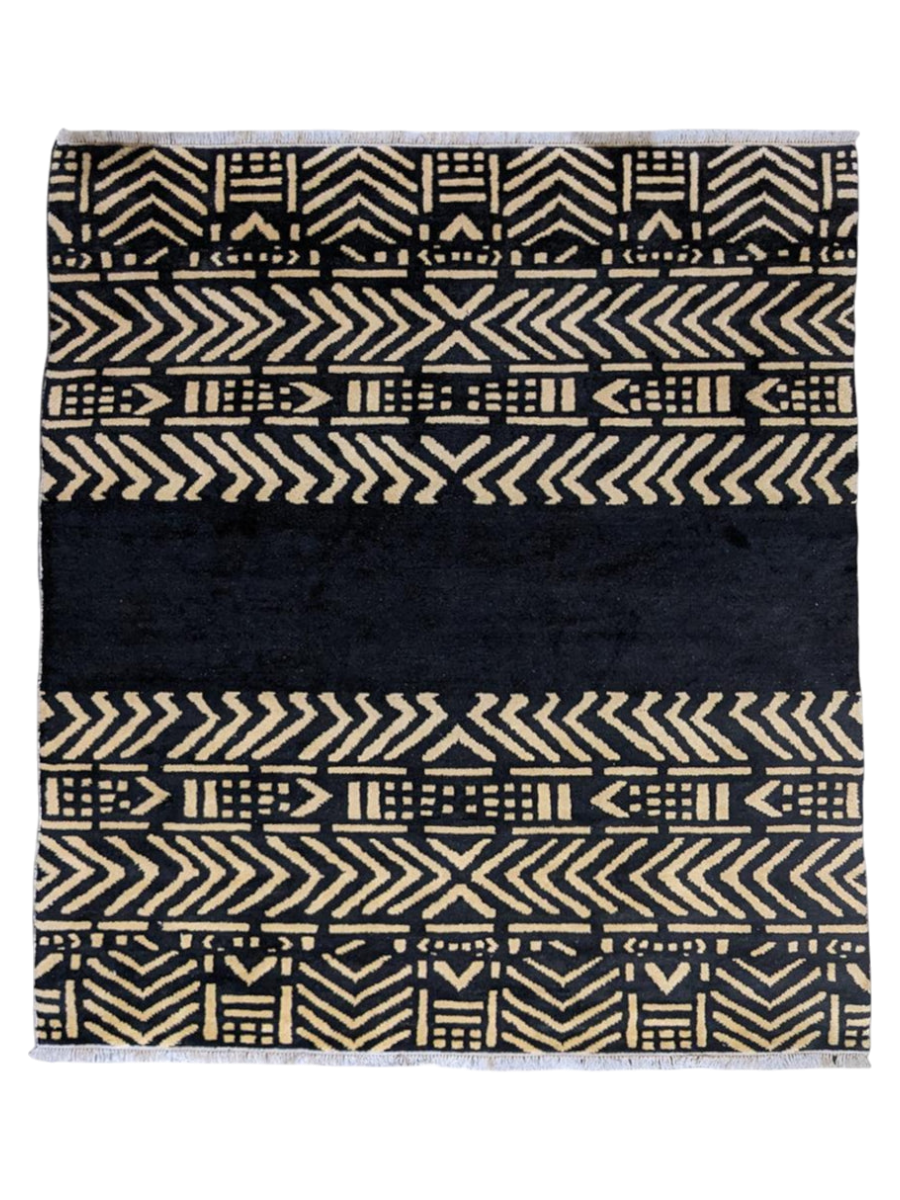
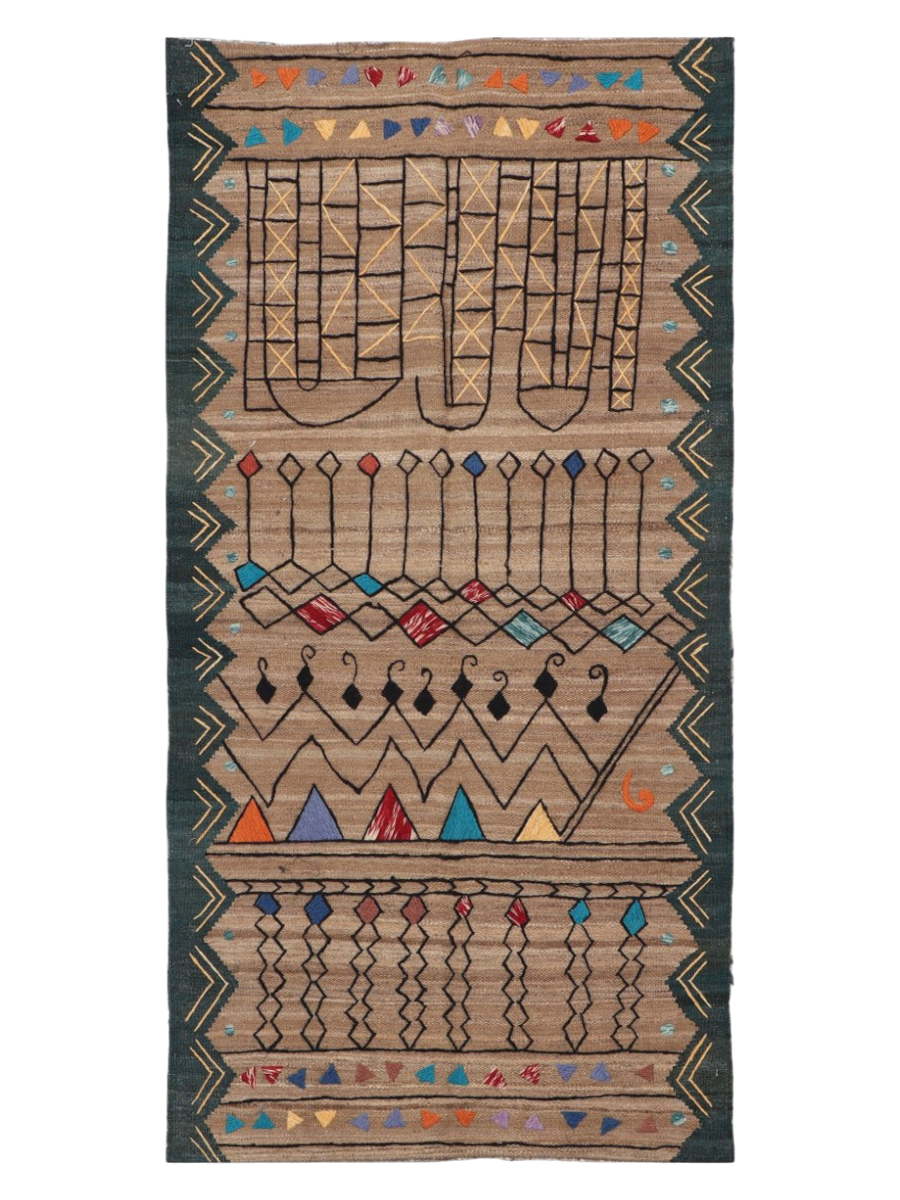
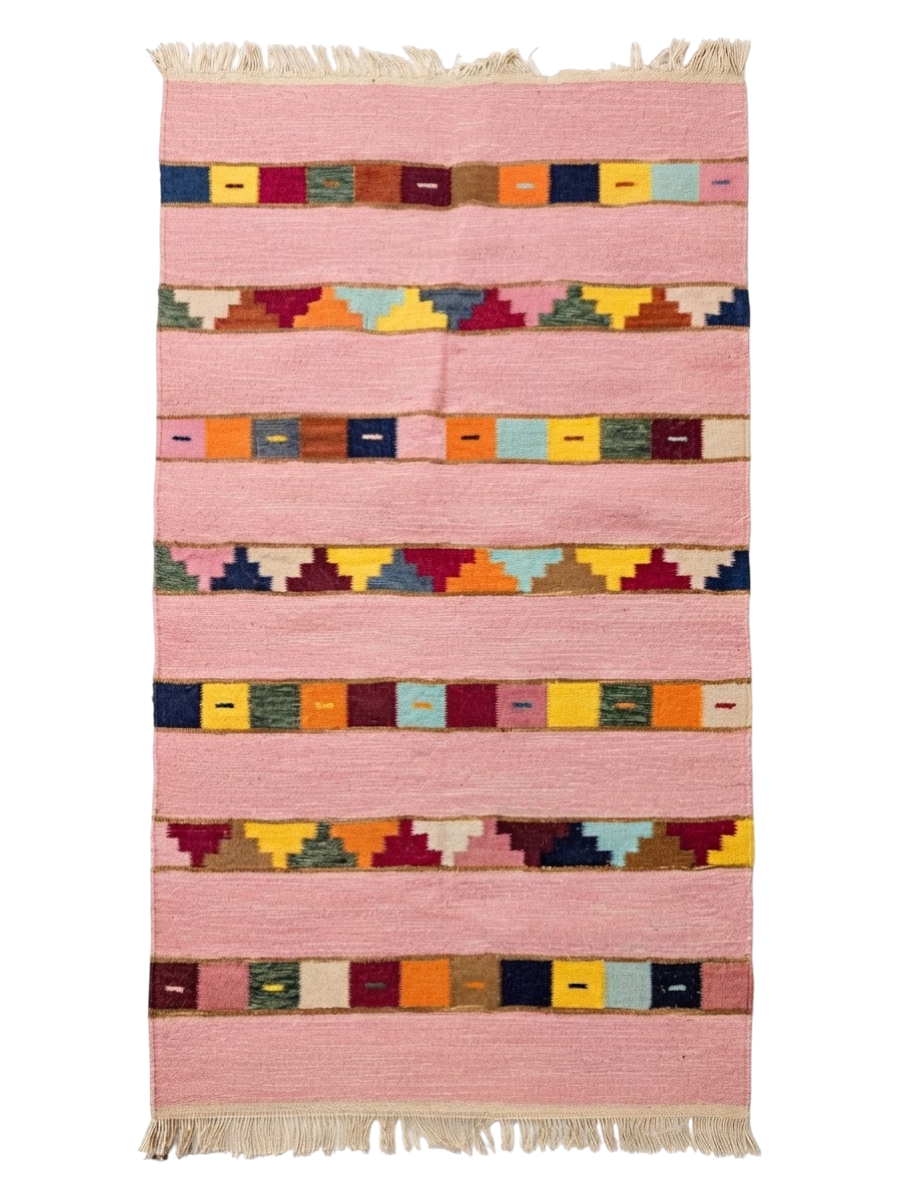
Chobi Baft comes from northern Afghanistan, with a hand-spun wool pile, natural dyes and a medium-density knot. Turkman Baft, also northern, has a dense, firm pile in deep reds and navies. Hazara Baft, from central Afghanistan, has a very low, dense pile with a firm, board-like feel. A kilim, from Maimana or Ghazni, is a flatweave with no knots and no pile.
Why naming the type matters
Two rugs both called "Afghan" can differ in pile height, knot type and how they feel underfoot. The type tells you what you are buying, and the region tells you where it was made. Browse Afghan rugs for the full range.
Chobi Baft
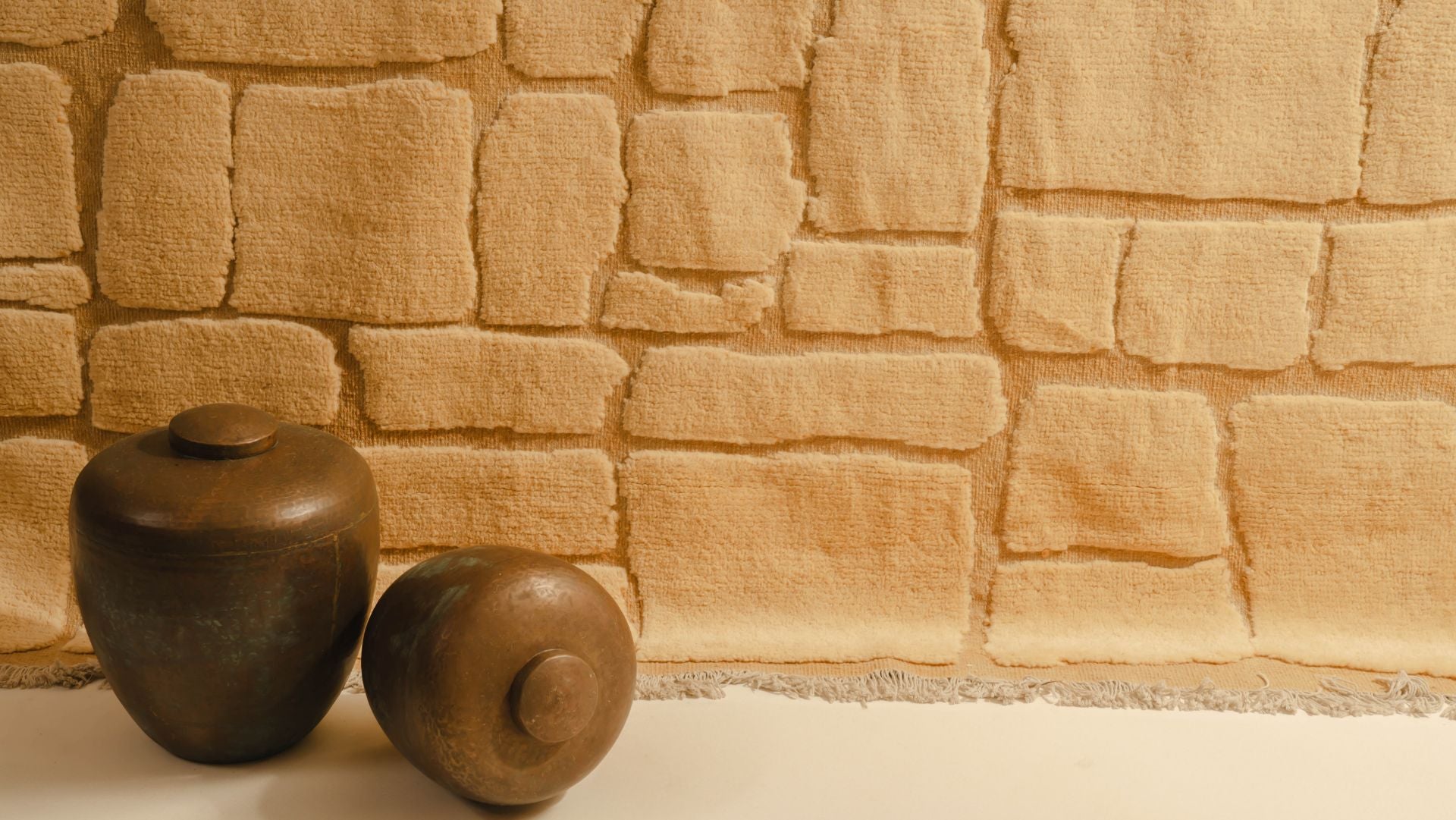
Chobi is woven in northern Afghanistan. It uses a Persian (asymmetrical) knot, cotton warp and weft, and hand-spun wool for the pile. The dyes are typically plant-based. The pile is short, about 6 to 9 mm, and the surface is smooth and slightly textured, with colour that shifts in horizontal bands from one dye batch to the next. That variation is intentional and part of the look. The weight keeps the rug from sliding on hardwood. Chobi suits living rooms, open spaces and dining areas.
Turkman Baft
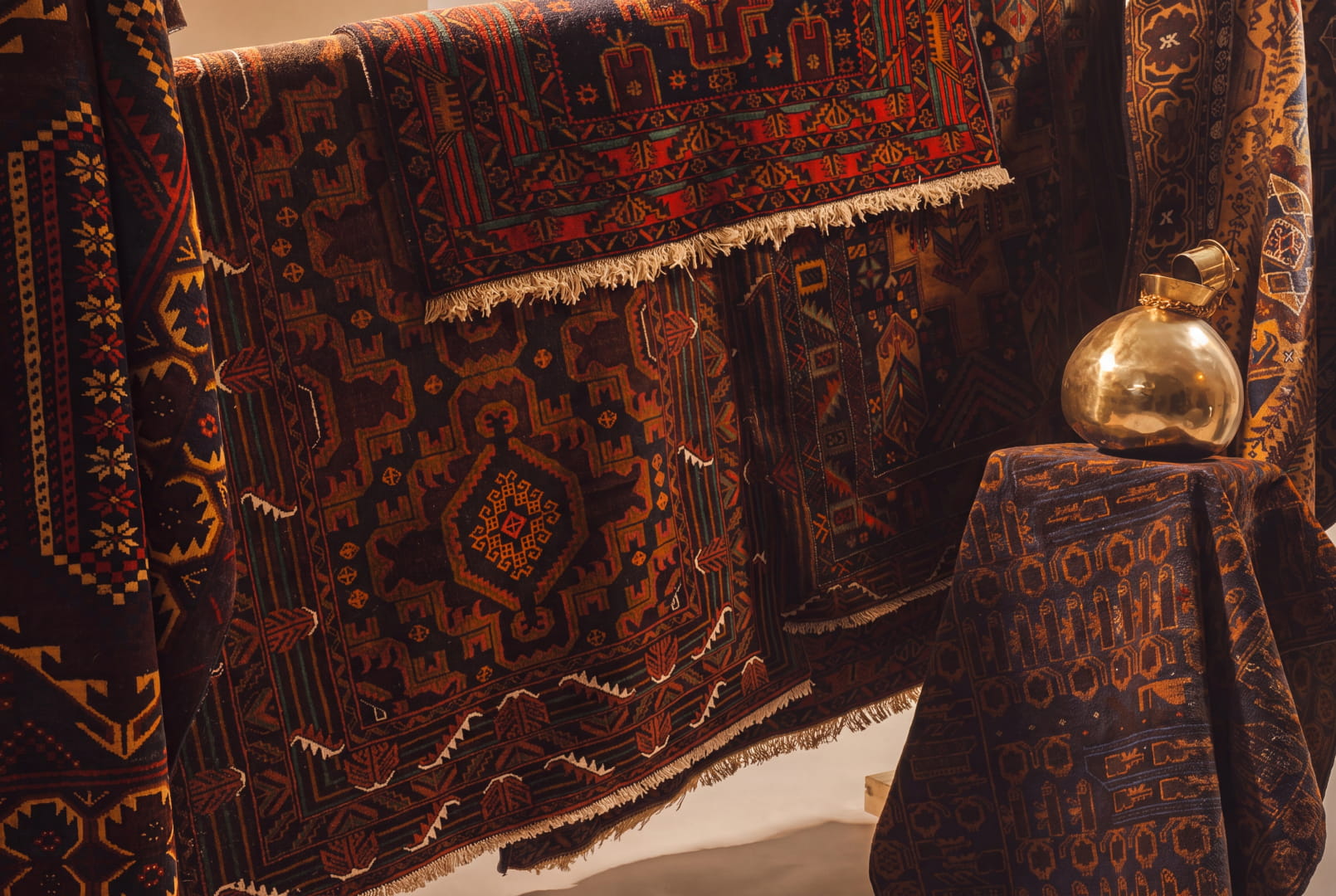
Turkman is also woven in northern Afghanistan, in a similar Persian-knot construction with hand-spun wool. It is known for deep reds and navies with tonal shifts, and a dense, firm, plush pile. It suits living rooms, halls and home offices.
Hazara Baft
Hazara comes from central Afghanistan and uses a Turkish (symmetrical) knot. The weave is extremely dense and the pile is very low, about 3 to 5 mm, which gives it a firm, board-like profile. Colour shifts softly across the field, like a worn-in rug. Its flat profile lets doors open and dining chairs slide, so it suits entrances, halls and dining rooms.
Kilim: Maimana and Ghazni
A kilim is a flatweave. There are no knots and no pile: weft threads are woven across the warp until they cover it, so the pattern shows on both faces and the rug is reversible. Kilims are thin, so doors clear them, and they need a non-slip pad. They suit kitchens, halls and dining rooms. Read what a Maimana kilim is for the full story, or browse kilim rugs.
The four compared
| Chobi Baft | Turkman Baft | Hazara Baft | Kilim | |
|---|---|---|---|---|
| Region | Northern Afghanistan | Northern Afghanistan | Central Afghanistan | Northern and central Afghanistan |
| Construction | Knotted pile | Knotted pile | Knotted pile | Flatweave |
| Knot | Persian (asymmetrical) | Persian (asymmetrical) | Turkish (symmetrical) | None |
| Pile | Short, about 6 to 9 mm | Short, dense, plush | Very low, about 3 to 5 mm | None |
| Colour | Horizontal bands, natural dyes | Deep reds and navies | Soft, worn-in shifts | Banded, plant dyes |
| Suits | Living rooms, dining areas | Living rooms, halls, offices | Entrances, halls, dining rooms | Kitchens, halls, dining rooms |
These are typical values. A rug's own listing gives its exact construction and size in cm.
How to choose
For a soft, weighty rug in a living room, look at Chobi or Turkman. For a rug that lets doors and chairs move, choose Hazara or a kilim. For a large rug without bulk, a kilim in the size you need works well: see rug sizes in cm explained.
For more on how handmade rugs are made, read our handmade rugs guide and hand-knotted vs hand-tufted vs hand-woven rugs. Wool is the pile fibre in all of them: see how to choose a wool rug. For the cultural side of kilims, see the story and cultural meaning of kilim rugs.
Questions we get asked
What is a Chobi rug?
A Chobi rug is a hand-knotted pile rug woven in northern Afghanistan from hand-spun wool, with a short pile and colour that shifts in horizontal bands.
What is the difference between Chobi and Hazara?
Chobi uses a Persian knot and has a short, smooth pile. Hazara uses a Turkish knot and has a very low, dense, board-like pile.
What is a Baft rug?
"Baft" means "woven" in Persian. In rug names it is followed by the tradition, such as Chobi Baft or Turkman Baft.
Is a kilim an Afghan rug?
Kilims are made in Afghanistan, including in Maimana, and in other countries too. A Maimana kilim is a kilim woven in and around Maimana in northern Afghanistan.
Which Afghan rug suits a hall?
A Hazara rug or a kilim runner. Both are low, so doors clear them. Add a non-slip pad.