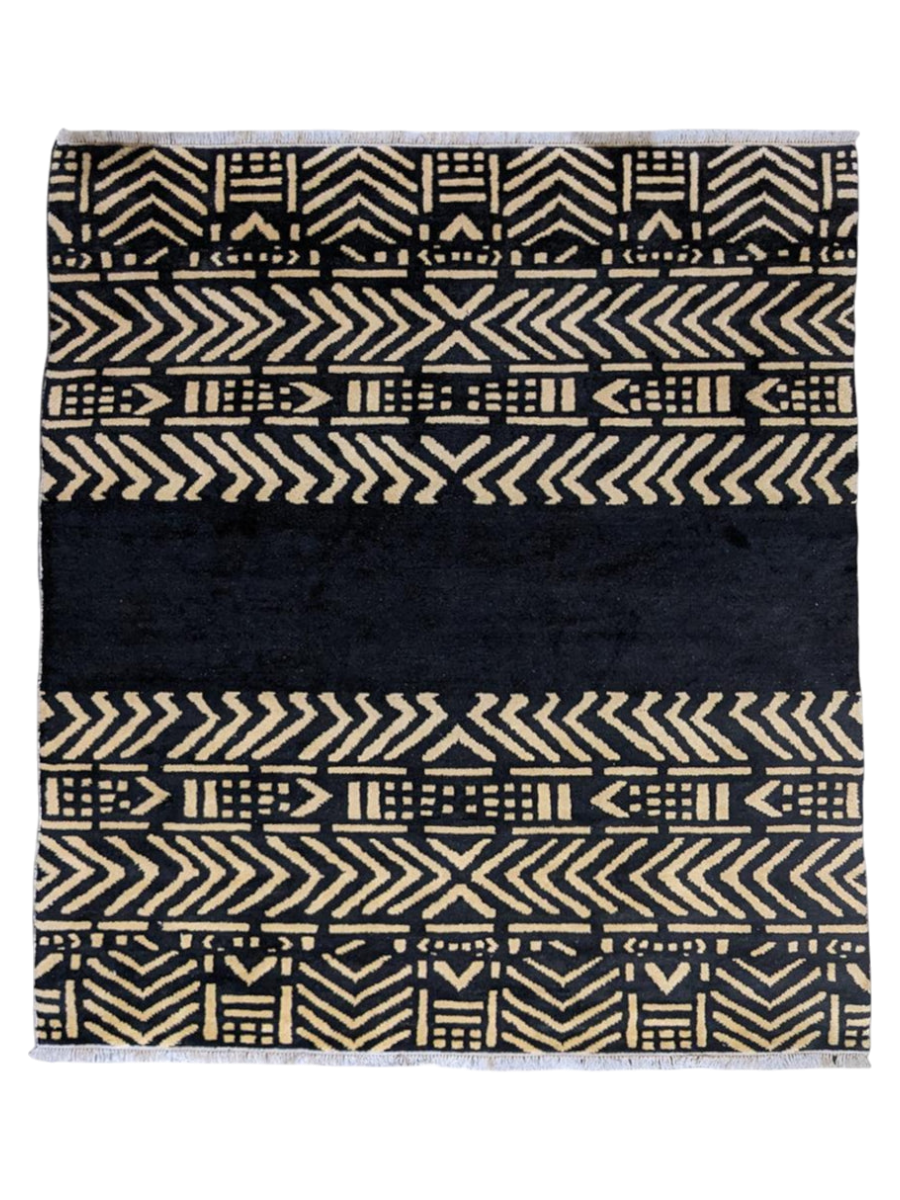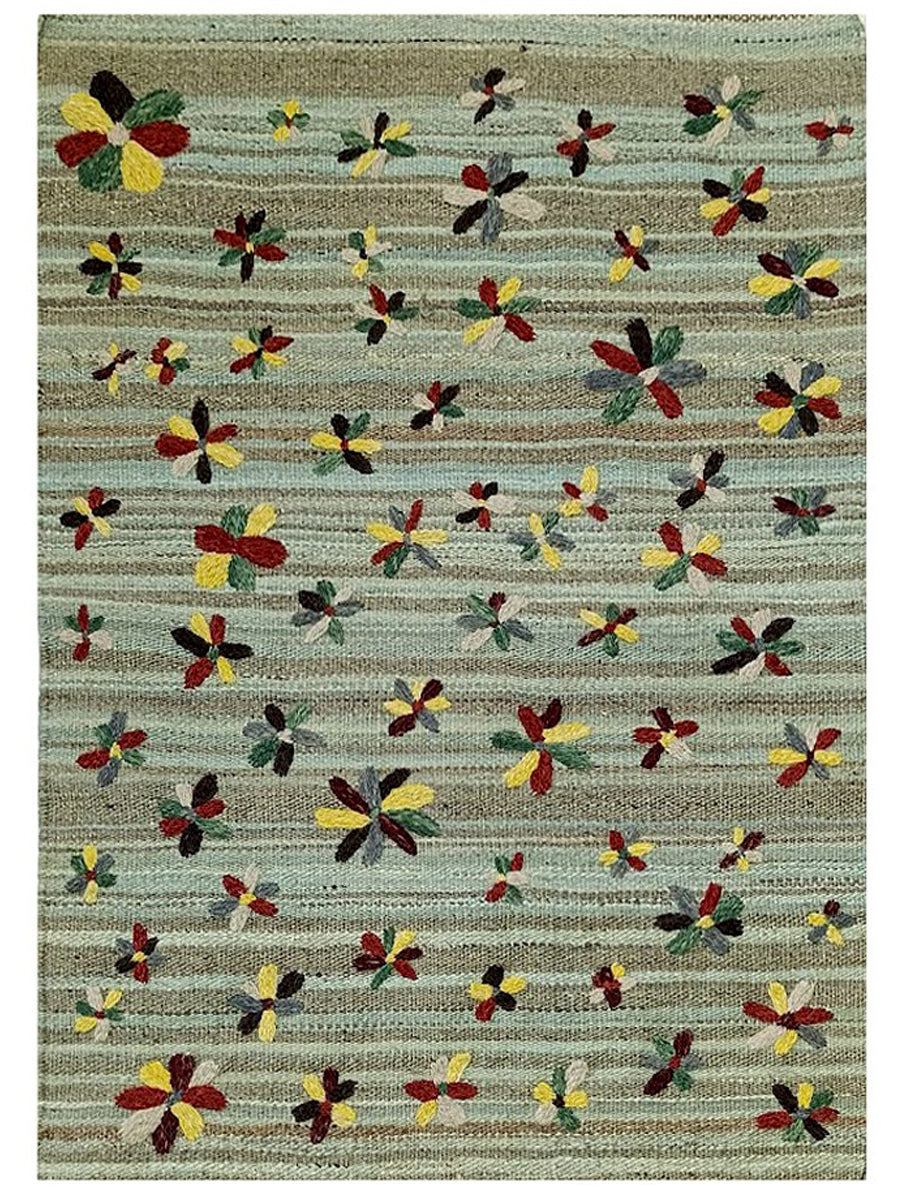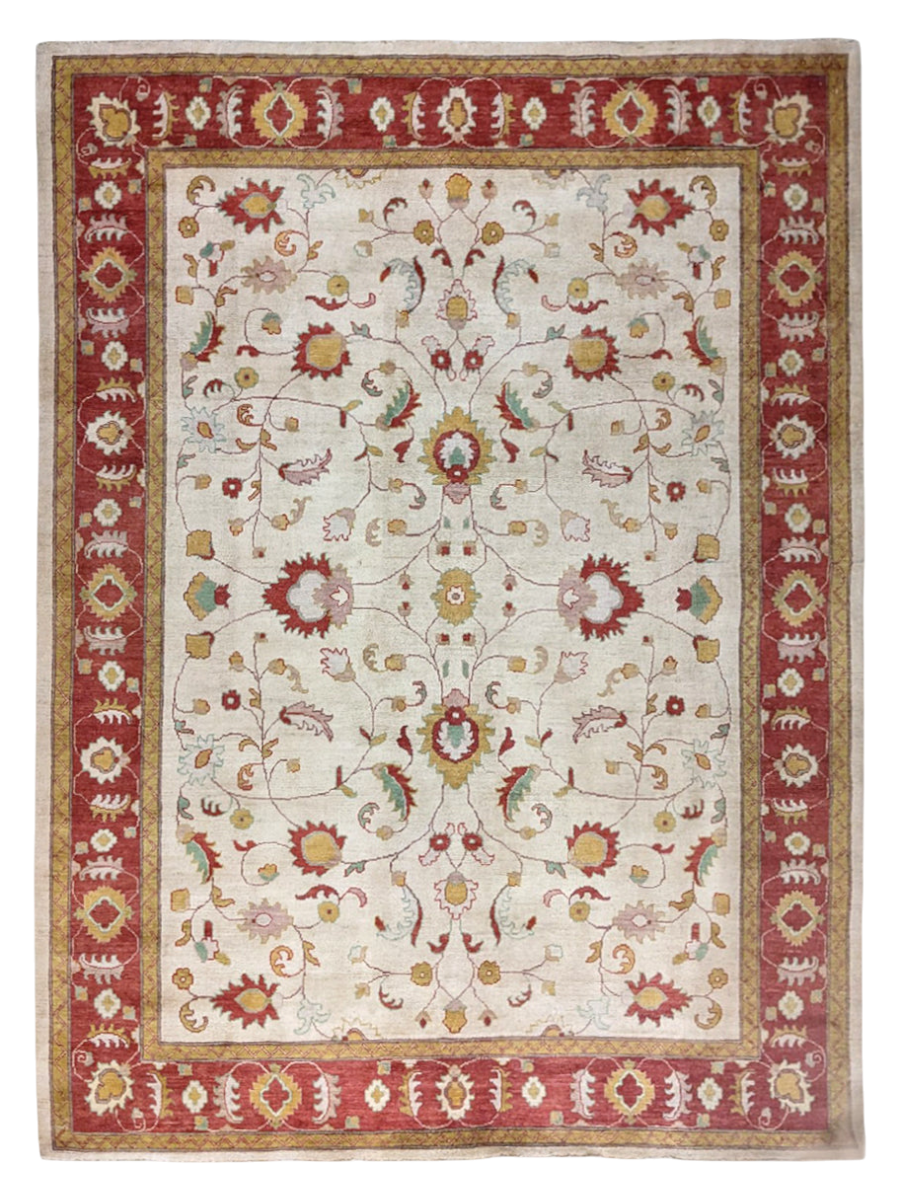
Type "Maimana kilim" into Google and you land on a product page — a photo, a size, a price. No context for what you're actually looking at, or why the name on the label matters.
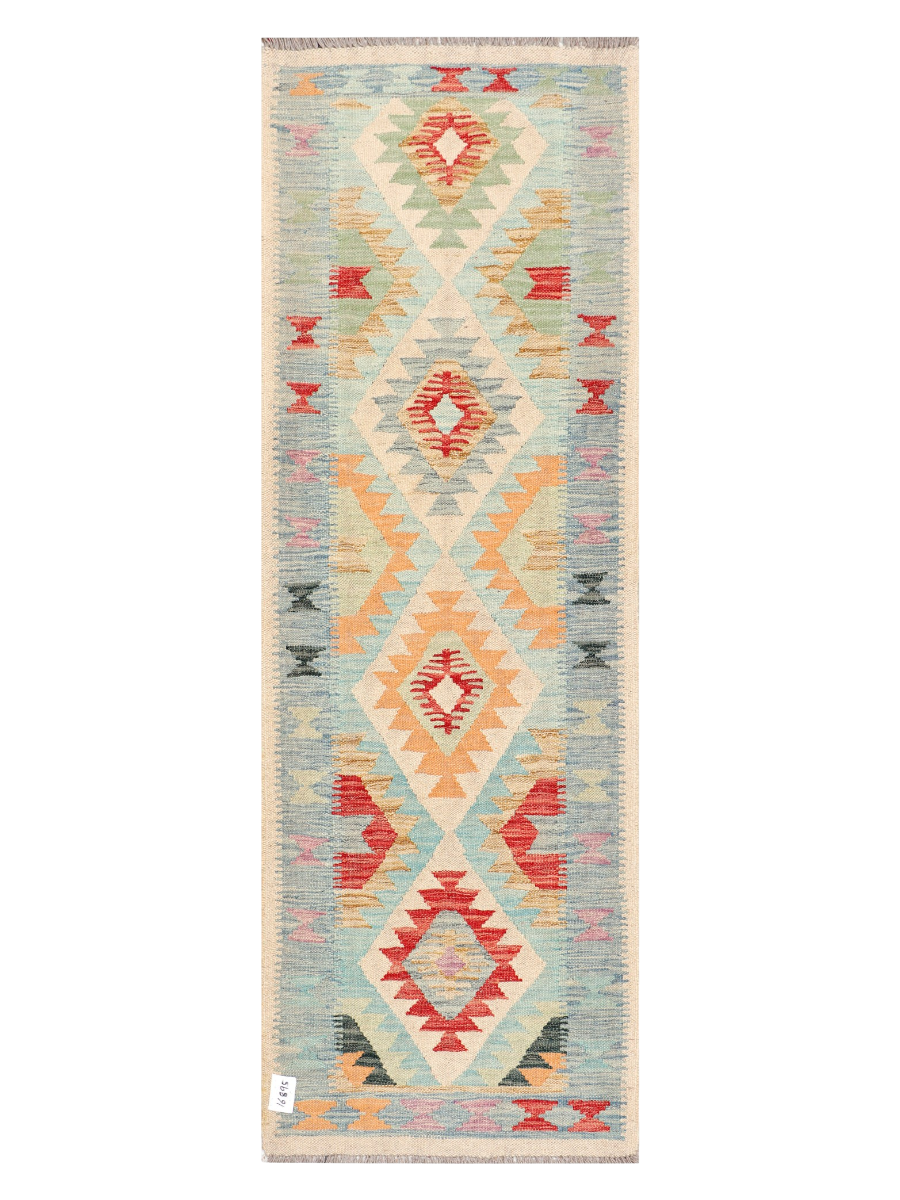
A Maimana kilim is a flatwoven rug from Maimana, the capital of Faryab Province in northern Afghanistan, made without a single knot. This guide covers where that name comes from, how the rug is built, how to tell a genuine handwoven piece from a machine-made copy, and how a kilim differs from a hand-knotted rug.
Key Takeaways
- A Maimana kilim is flatwoven, not knotted — no pile, just tightly interlocked warp and weft (Wikipedia: Kilim).
- Maimana is a real place: the provincial capital of Faryab, roughly 400 km northwest of Kabul (Wikipedia: Maymana).
- The craft in this region is historically carried by Uzbek weavers and passed mother to daughter, not sourced from a commercial pattern book.
- Slight irregularities in the weave are a sign of hand production, not a flaw.
- Kilims are reversible and lighter than hand-knotted rugs — different construction, different use case.
What Is a Maimana Kilim, Exactly?
A kilim is a flat tapestry-woven rug with no pile — the design comes entirely from tightly interwoven wool weft and a hidden warp, not from tufts of knotted yarn standing up off a backing (Wikipedia: Kilim). A Maimana kilim is a kilim woven in and around Maimana, Faryab Province, in northern Afghanistan — one of the region's longest-running weaving traditions, carried largely by Uzbek weavers who settled the area.
That's the whole distinction in one line: "kilim" describes how it's built. "Maimana" describes where it's from. Both matter — a flatweave built the same way but woven somewhere else isn't a Maimana kilim, whatever a listing calls it.
Where Maimana Is — and Why the Region Matters
Maimana sits in Faryab Province, roughly 400 km (250 mi) northwest of Kabul, and has served as a provincial capital and a commercial crossroads for centuries — historically the seat of the Maimana Khanate, connecting trade routes between neighbouring regions (Wikipedia: Maymana).
That trade-route history is part of why the weaving tradition is specific to this city rather than the country as a whole. "Afghan rug" as a catalogue label flattens dozens of distinct regional traditions — Maimana kilim, Turkmen-style rugs, and others — into one generic bucket. Naming the region instead of the country is the only way to actually say what you're buying.
How a Maimana Kilim Is Woven

The technique is called slit-weave (also dovetail-weave): when the pattern changes colour, the weaver turns the weft yarn back on itself at the boundary rather than carrying it across, leaving a small vertical slit between colour blocks. That's what gives kilim patterns their sharp, clean edges instead of the softer blending you get in a knotted pile rug (Wikipedia: Kilim).
Construction, in order:
- Warp — vertical threads, wool or cotton, strung on the loom. Fully hidden by the weave except at the ends, where it becomes the fringe.
- Weft — horizontal threads, almost always wool, packed down tight enough to completely cover the warp. This is the weft-faced plain weave that makes a kilim flat rather than piled.
- Colour changes — handled with the slit-weave turn described above, block by block, row by row.
In Maimana specifically, this craft has historically sat almost entirely with women, and the patterns aren't pulled from a commercial design catalogue — they're a visual vocabulary passed down within families, with each weaver bringing her own read on it. Historically, colour came from vegetal and organic dyes; more recent pieces increasingly use synthetic dyes alongside natural ones for a wider colour range.
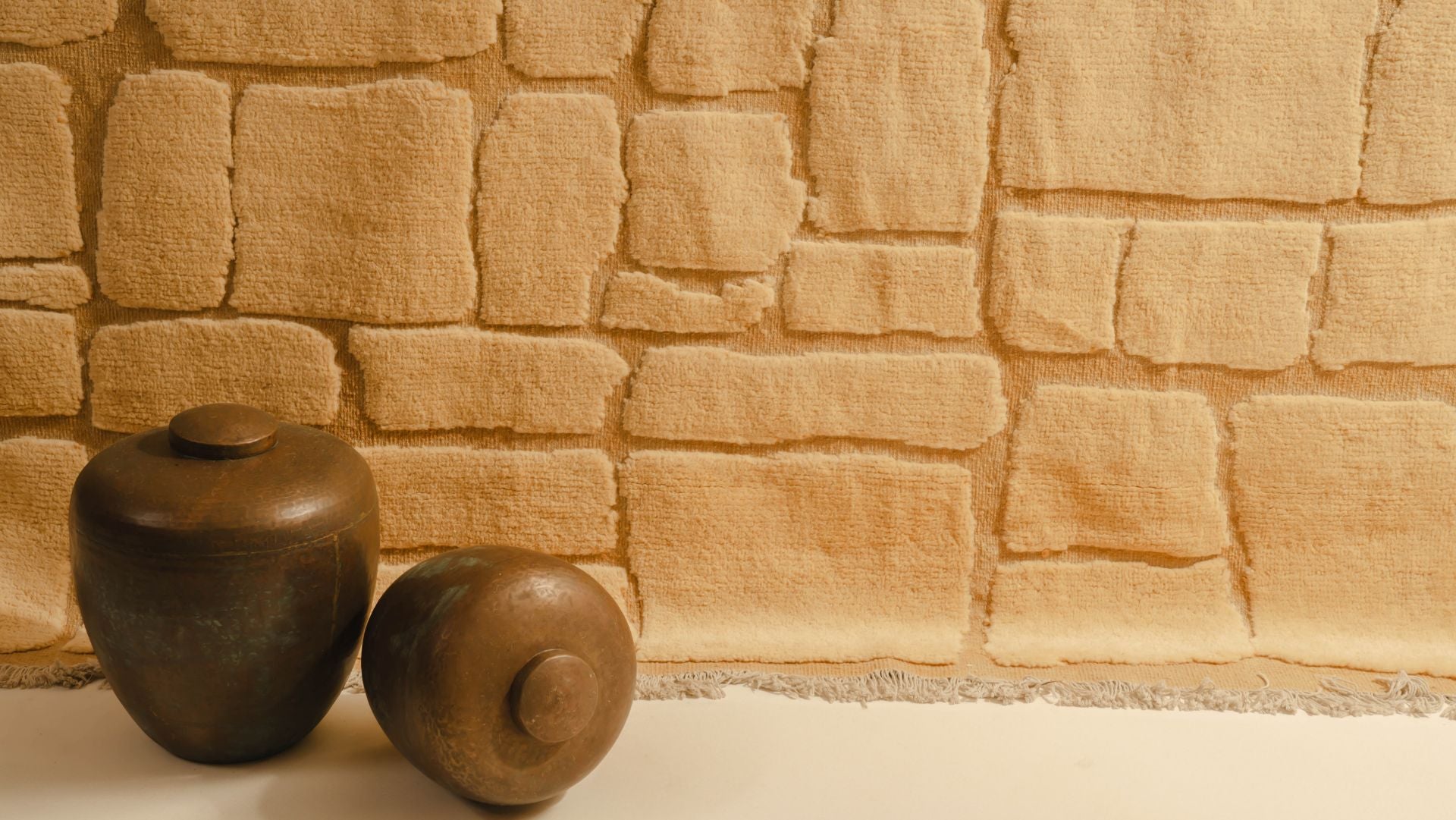
What this means in practice: because the pattern lives in the weaver's head and hand rather than a printed template, no two Maimana kilims — even the same "design" — come out pixel-identical. That's not a limitation of the process. It's the process.
Maimana Kilim vs Hand-Knotted Rug — What's the Difference?
Both are handmade. The construction is not the same, and it changes how the rug looks, feels, and wears.
| Maimana Kilim (flatweave) | Hand-Knotted Rug | |
|---|---|---|
| Pile | None — flat on both faces | Yes — tufted knots create a raised pile |
| Reversible | Yes, both sides usable | No, one face only |
| Weight/thickness | Lighter, thinner | Heavier, thicker |
| Pattern edges | Sharp, geometric (slit-weave) | Softer transitions between colours |
| Typical knot count | None — no knots at all | Measured in knots per square metre |
| Feel underfoot | Firm, low-profile | Plush, cushioned |
Source on hand-knotted construction: Wikipedia: Knotted-pile carpet.
Neither construction is "better" — they solve different problems. A kilim layers well over a larger rug, works both sides, and suits a room where you want texture without bulk. A hand-knotted piece is the one you want underfoot in a formal sitting room, where the pile and weight are the point.
How to Tell a Genuine Handwoven Maimana Kilim
Machine-made "kilim-style" rugs exist, and they're built to imitate the look at a fraction of the weaving time. A few tells:
- Fringe is structural, not sewn on. On a genuine flatweave, the fringe is the exposed end of the warp threads that ran the rug's whole length. If the fringe looks stitched to the edge as a separate piece, it isn't a real kilim construction.
- Slight irregularity is a feature. A perfectly uniform, machine-precise repeat across the whole rug is a sign of a printed or power-loomed copy. Hand tension varies row to row — that's what produces the faint, human unevenness collectors look for.
- Reversible face. Turn it over. A genuine flatweave looks essentially the same on both sides, since there's no pile to hide the back. A printed imitation usually has an obviously different, uniform backing.
- Weight and drape. Wool flatweave has a specific heft and a way of lying flat without curling hard at the corners. Synthetic imitations tend to be stiffer or noticeably lighter.
If you're unsure whether a piece in your home is a genuine handwoven kilim, check the fringe and the reverse face first — those two checks catch most imitations.
Caring for a Maimana Kilim
General wool-flatweave care, not specific to any one piece:
- Vacuum without a beater bar or rotating brush — a suction-only setting protects the weave.
- Rotate the rug periodically so foot traffic and sun exposure wear evenly.
- Blot spills immediately with cold water; don't rub, and don't apply strong detergent to natural dyes.
- Keep out of prolonged direct sunlight where possible — UV fades natural dyes faster than synthetic ones.
- For deep stains or a full clean, use a professional wool-rug cleaner rather than a home carpet-cleaning machine.
Why Imaco Sources Maimana Kilims Direct From the Loom
We name the region because the region is the story — "Maimana kilim" tells you more than "Afghan rug" ever could, and it's the only version of the claim we're willing to make. Our Maimana kilims come direct from the loom in Afghanistan to your door in the UK — no import warehouse in between, no middleman markup layered onto the price.
What we can state as fact, not adjective: Imaco is Label STEP certified, every Maimana kilim ships with 14-day returns, and UK delivery is free. What we won't do is call a piece "premium" or "luxury" without something specific behind it — with these, the specific thing is the weaver, the region, and a construction method that hasn't changed in generations.
Because each piece carries the small hand-variation described above, no two are ever truly identical — genuinely one-of-one, not a marketing line stretched over a batch-produced design.
Shop the Maimana Kilim collection
Frequently Asked Questions
Is a kilim the same as a rug?
A kilim is a type of rug — specifically a flatwoven one with no pile, built by interlocking wool weft over a hidden warp (Wikipedia: Kilim). "Rug" is the umbrella term; kilim, hand-knotted, and tufted are different constructions within it.
Are Maimana kilims reversible?
Yes. Because there's no pile to hide the back of the weave, a genuine flatweave looks nearly identical on both faces and can be used either side up.
Who traditionally weaves Maimana kilims?
The craft in the Maimana area has historically been carried largely by Uzbek weavers, with patterns passed down through families rather than drawn from a commercial design catalogue.
Is every Imaco Maimana Kilim one of a kind?
Yes, for this line — each piece is a single hand-loomed unit, not a design run repeatedly. If a specific piece sells, we mark it sold and keep the listing up rather than restocking it, since a repeat commission would come out slightly different by hand anyway.
In Short
A Maimana kilim earns its name two ways: the flat, knot-free slit-weave construction, and the specific city and weaving tradition it comes from. Knowing both means you can tell a genuine piece from an imitation, and know what you're actually buying when a listing says "Maimana" instead of just "Afghan."